 |
Asia Pacific
Comprises Bidvest Australia, Bidvest New Zealand, Angliss Singapore and Angliss Greater China. Bidvest leads the foodservice industry and offers a full end-to-end national distribution service. |
| |
Bidvest Australia
Rachel Ruggiero
Chief operating officer |
Bidvest New Zealand
Nigel Boswell
Managing director |
Angliss Singapore
Beng Fong Loke
Managing director |
| |
|
|
Angliss Greater China
Johnny Kang
Managing director |
|
|
|
Revenue
R19,6 billion
11,5% decrease
Trading profit
R833,1 million
14,2% decrease
|
|
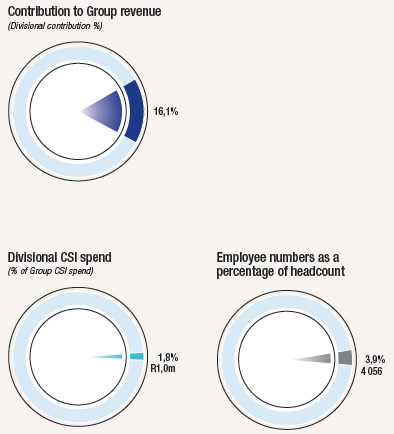 |
Financial indicators
(for the year ended June 30) |
2011
R’m |
2010
R’m |
| Revenue |
19 563,1 |
17 547,6 |
| Trading profit |
833,1 |
729,4 |
| Operating assets |
5 083,6 |
4 232.8 |
| Operating liabilities |
2 860,5 |
2 333,2 |
| Depreciation |
152,5 |
138,2 |
| Amortisation and impairments of intangible assets |
7,0 |
4,7 |
| Goodwill and intangible assets |
1 183,3 |
1 012,6 |
 |
|
|
| Sustainable development indicator overview |
|
|
| Employees |
4 056 |
4 149 |
| Total training spend (R’000) |
2 308 |
2 117 |
| Training spend per employee (R) |
569 |
510 |
| Employees attending HIV/Aids training (%) |
– |
– |
| Lost-time injury frequency rate |
39,3 |
21,3 |
| Work-related fatalities (number) |
– |
– |
| CSI spend (R’000) |
1 049 |
855 |
| Total water usage (litres ’000) |
70 835 |
77 222 |
| Total electricity usage (including electricity from renewable sources) (kWh ’000) |
70 535 |
64 045 |
| Petrol (litres) |
1 188 327 |
1 123 541 |
| Diesel and biofuel (litres) |
8 168 426 |
6 960 761 |
| Total carbon emissions (tonnes) |
76 641 |
70 439 |
| Carbon emissions per employee (tonnes) |
18,9 |
17,0 |
| |
|
|
QUICK LINK: Operational report and historic sustainable development data
Material issues
- The challenge of maintaining success in difficult economic conditions
- Increasingly tight labour markets
- The challenge of attracting and retaining talent
- Risks associated with increasing frequency of natural disasters
- Continuing need to further reduce carbon emissions
|


