|
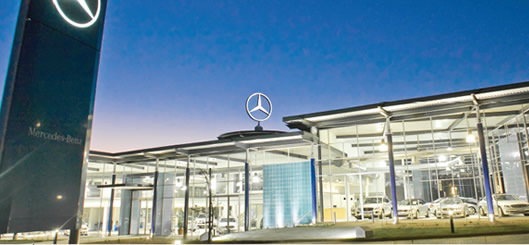
One of South Africa’s largest motor vehicle groups offering leading motor brands through 116 dealerships, as well as vehicle auctioneering. |
Revenue
R18,6 billion
17,4% increase
Trading profit
R255,4 million
10,7% increase
|
|
 |
Financial indicators
(for the year ended June 30) |
2011
R’m |
2010
R’m |
| Revenue |
18 608,3 |
15 849,8 |
| Trading profit |
255,4 |
230,8 |
| Operating assets |
2 668,4 |
2 398,6 |
| Operating liabilities |
1 772,1 |
1 419,9 |
| Depreciation |
56,4 |
59,7 |
| Amortisation and impairments of intangible assets |
– |
– |
| Goodwill and intangible assets |
229,1 |
229,1 |
| Sustainable development indicator overview |
|
|
| Employees |
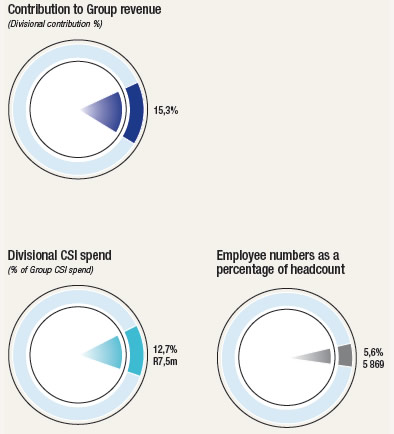
5 869 |
5 922 |
| Total training spend (R’000) |
93 145 |
84 131 |
| Training spend per employee (R) |
15 871 |
14 206 |
| Employees attending HIV/Aids training (%) |
100,0 |
67,6 |
| Lost-time injury frequency rate |
0,9 |
2,6 |
| Work-related fatalities (number) |
– |
– |
| CSI spend (R’000) |
7 534 |
7 408 |
| Total water usage (litres ’000) |
339 407 |
331 200 |
| Total electricity usage (including electricity from renewable sources) (kWh ’000) |
43 487 |
40 480 |
| Petrol (litres) |
6 228 841 |
6 273 578 |
| Diesel and biofuel (litres) |
3 344 928 |
2 949 788 |
| Total carbon emissions (tonnes) |
67 858 |
62 997* |
| Carbon emissions per employee (tonnes) |
11,6 |
10,6* |
QUICK LINK: Operational report and historic sustainable development data
Material issues
- Japanese earthquake and tsunami have adverse effects on the supply of new vehicles and parts
- Declining vehicle parc (the number of vehicles on the road) resulting in lower contributions from parts sales and workshop services
- Share of the national dealer market remained flat
- Extreme reliance on business and consumer confidence, which has declined since 2008
- Effect of economic downturn and legislation on turnover and business practices
- Retaining customer loyalty through responsible business practices
- Difficulty in attracting and retaining senior level HDIs
- Talent attraction and retention
- Impact of increasing fuel prices and stricter emission standards on sales in certain vehicle categories
- Imperative to grow the value segment of the vehicle market
- Management of workplace HIV/Aids
- Impact of crime on dealerships
- Effect of fringe benefit tax increase
|
|