|

|


| Currently viewing: Bidvest Foodservice / Next: Bidvest Namibia | ||||||||||||||||||||||||||||||||||||||||||
Bidvest Foodservice“Almost every business performed better than the prior year, most beat their budget and most developed sustained momentum.”
OverviewThe business registered a generally pleasing performance in a watershed year as the strategies developed since the global financial crisis gained further traction. Revenue increased by 14,0% to R116,6 billion (2014: R102,3 billion) while trading profit moved 25,1% higher to R4,0 billion (2014: R3,2 billion). All four geographic pillars did well. In the UK, profitability grew by 31,2% and overall represented 27,3% of total food group profit. Europe grew profit by 57,0% to 20,0% of the total. Australasia remained the largest contributor at 34,1% of the total after a profit increase 13,3% while Emerging Markets grew profits by 2,9% to 16,4% of the total. Contributions came from over 30 sovereign countries and every continent except North America, underlining our global reach and the broad appeal of our unique product and service offering. We witnessed continued improvement in the UK economy and renewed strength in parts of Eastern Europe. Some positive signs also came through in Western Europe. Growth slowed in both Australia and New Zealand while most countries in our Emerging Markets portfolio faced economic headwinds. Despite falling growth in China, almost all of our Asian businesses performed well. Singapore is still in the midst of a strategic transition to the foodservice model. Food group gains were made in an environment that was often characterised by zero or extremely low food inflation. In the foodservice industry, a measure of inflation is often helpful. It is testimony to the momentum achieved by our teams that they secured sustained growth without this form of assistance.
Our success is driven by people. Irrespective of what systems you develop and the technology you employ, there is no substitute for good people. Unfortunately there were two fatalities in our South African division this year, both as a result of road accidents. We extend our condolences to the families. A central element in our business strategy is the attraction, retention and development of the right people. The criteria for selection and development of these contributors to our growth may or may not include high levels of academic qualification. What will always be relevant are their industry experience and knowledge, their enthusiasm and their ability to add value. Their contribution was absolutely critical in a year when many teams achieved sustained growth in highly competitive markets within economies afflicted by low GDP growth. Sometimes the challenge for our people is not how to achieve counter-cyclical growth, but how to maximise the potential within economies that show signs of recovery. Economic recovery creates its own set of business challenges. One of these is the recruitment and retention of good people who suddenly have much greater career choice, perhaps in entirely different sectors.
Though the uniqueness of each operation is respected, a strategic effort has been made in recent years to break down any silos and encourage the sharing of information and learnings. In 2015, it was remarkable to see the high level of engagement that our global teams have with one another. Decentralisation remains a core pillar of the business, yet we witnessed growing cooperation between our operations, without interference from a central head office. One effect is to accelerate positive developments, as teams adopting new products or systems are helped along the learning curve by colleagues from another geography who have already implemented similar innovations. AcquisitionsIn 2015, we had the benefit of the full-year effect of our 60% interest in Brazil’s Distribuidora E Importadora Irmãos Avelino Avelino. The foodservice business was acquired in January 2014 to give further impetus to our expansion into South American markets. The acquisition bedded in well. With effect from the beginning of our 2015 year, we acquired a controlling interest in Gruppo DAC S.p.A. (DAC), a leading Italian foodservice provider. The vehicle for our entry into the Italian market made pleasing progress. In the UK, we purchased PCL 24/7, a chilled products storage and distribution business that gives added bulk to our existing logistics operations. Consolidation of the two businesses enabled further growth in an important market. Several smaller bolt-on acquisitions were concluded in various markets. E-commerceThe development of e-channels is no longer revolutionary. Evolution is the order of the day. All teams are growing their e-commerce volumes while finding new ways to assist customers through apps and internet and mobile solutions. System enhancement is non-stop. In several markets, we are leaders in the e-commerce space and use these tools as an effective means of entrenching customer relationships. Investment will therefore be maintained and in many cases will be stepped up.
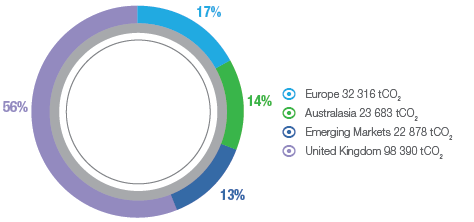
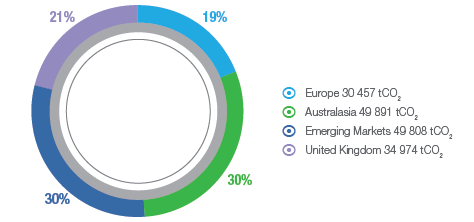
Carbon by geographical split
Environmental issues dominate any long-term strategic view of our business’s continued development. As population numbers continue to grow, so do pressures on resources. Though low food inflation is a feature of current markets, it is doubtful this will persist in the long term. As pressure on resources grows, we can expect government and consumer attention to focus on sustainable solutions. It is our job to provide them. Environmental awareness already has an impact on our market. For instance, it is increasingly evident that a growing number of consumers check pressure on fish resources before selecting the fish they would like to buy. This is just one example of how demand can be influenced by environmental considerations. From a reputational standpoint, it is vital for our business to be perceived as a trusted solution finder with total commitment to sound environmental practice. Our businesses therefore cooperate fully with the authorities on environmental and public health issues. Often, the effort to reduce environmental impacts coincides with efforts to control our cost base as our teams already take steps to reduce the use of water, electricity and fuel. In addition, we pay close attention to food safety, “green” product development, and the practices adopted by our suppliers. Healthy food choice is also gaining relevance. Among consumers and many of our business-to-business customers we see growing focus on food product provenance. Local production supports local growers and breeders while reducing “food miles”, thereby achieving added fuel efficiency. We embraced these trends at an early date and today witness continued growth of local and organic food ranges. Our sales teams collaborate with many small, locally focused restaurants and hotels. One area of collaboration is menu development. It is noteworthy that when menus are changed, increased prominence is given to fresh local products and local dishes, along with details of how local food ingredients find their way into recipes. We stay close to these developments as the growth of the Fresh category is a strategic point of focus for our business. When sourcing products from suppliers, we not only consider price and the ability to meet quality specifications, we also consider the labour practices adopted by the company concerned. Environmental sensitivity is built into the way we do business. This is not going to change. In fact, we expect sensitivity to become more acute.
In line with our decentralisation philosophy, product development was once again driven by local teams close to their local markets. One common dynamic was evident – the creation of products for our customers that cut waste, save time and create business growth opportunities. Portion-controlled products, pre-cubed, pre-sliced, par-cooked and marinated products all add value as they reduce preparation time and often enable our customers to offer a premium option. The futureWe are extremely excited about future prospects, even though we expect continued challenges across all food group geographies. The impact of falling growth in China demands particular attention. We cannot control economic forces and the drivers of GDP growth in markets from South America to the Baltic Republics. What we can control is the ability of our businesses to meet customer needs, achieve efficiencies and strive for competitive advantage. All our operations are focused on these challenges and are well positioned to address them. We also have opportunities to leverage our broad geographic footprint. For example, our entry into the Italian market gives us a base from which to address global demand for Italian cuisine as the DAC relationship creates “made in Italy” procurement synergies. Already, several of our businesses are exploring the best way of bringing these products to their markets. Similarly, we now have a presence in Brazil and China. We are therefore well placed to meet demand for Chinese specialities or products with a Brazilian ambience. All our businesses are tracking well and have built solid momentum. Each team is committed to maintaining this momentum through further gains in market share. Organic growth is the major driver. Small, bolt-on acquisitions may occur, but no major acquisitions are in the pipeline at the moment. Our businesses in Australasia, the UK and Europe have made good progress. We see potential for further growth in all these regions. Emerging Markets has faced various challenges in the recent past. These challenges may continue, but our teams have demonstrated their ability to secure growth in difficult trading conditions. Bidvest resilience such as this will stand us in good stead in all geographies. Regional overviewUnited KingdomBidvest Foodservice (formerly 3663) Rebranding under the Bidvest Foodservice identity was completed. The team performed strongly and began the process of simplifying the business and buying into the core Bidvest philosophy of decentralisation. A smaller team under new leadership drove significant cultural and operational changes. The new dynamic and significant new infrastructure investment contributed to sales growth across all parts of the business. Progress during the year suggests that the appetite and capacity are there for continued growth. Good cooperation with the sister businesses at Logistics and Fresh was a feature of the year. Bidvest Logistics The core QSR business performed well, despite a zero food inflation environment. A major national account was secured for 10 years along with related Fresh volumes. Another QSR chain renewed its contract. Newly acquired PCL delivered the anticipated gains and settled in well. The consolidated business emerged as a meaningful player in the UK’s growing food logistics industry. The realisation of further gains from the PCL acquisition is a priority going forward. Bidvest Fresh The business recorded another pleasing result, with good contributions from Seafood and Produce. Henson’s, a London meat business, was acquired and performed ahead of expectations. Growth opportunities in produce, meat, speciality and cheese are receiving focused attention. Further impetus in the year ahead will be provided by the absorption of the Swithenbanks Fresh and Fine Foods business (from 3663).
Europe Bidvest Deli XL Netherlands Markets were under pressure and operations were impacted by a significant fall in institutional business. Contract renewal and margin management were focus areas, as was cost reduction. Bidvest Belgium The economy remained sluggish and performance was subdued. The transition from a logistics operation into a foodservice business continued. The priority for the year ahead is further growth of independent volumes. A base has been established with the potential for continued gains. Bidvest Czech and Slovakia The businesses achieved record results, underpinned by strong performances across most aspects of the operation in both jurisdictions. This indicates that work to rebalance the business has made significant progress. Historically, substantial gains were largely driven by good summer weather and strong ice-cream volumes. Sales success is now being achieved across a much broader product mix, with good contributions by both Foodservice and Retail. A fourth depot in Czech was opened – this one in Pilsen – and a Fresh business acquired. Farutex Poland Pleasing results were achieved. Investment in new infrastructure contributed to the strong performance. The exit from several large but low-margin accounts was completed. Expansion into new areas such as fresh fish, wine and meat was successful. The business is well positioned to secure continued growth as Polish incomes rise and lifestyles change. Bidvest Baltics Concerns arose around the Ukraine-Russia confrontation and possible ramifications in the Baltics. However, there was no noticeable impact on our businesses in Latvia, Estonia and Lithuania. All operations made continued progress and sustainable profits were achieved in Lithuania. DAC Italy The business is positioned as a credible number two player in the national market. The business has long had a strong base in the north of the country. Increased attention is being given to growing the business in central and southern Italy. Late in the period, a Rome warehouse went into operation. Frozen capacity is being expanded in Flero and Padua. Sales volumes were strong and new monthly records were achieved in the fourth quarter. The street market made a strong contribution to overall results. As the year closed, a growing number of food group companies were sourcing “made in Italy” products from DAC. Bidvest Spain The market presents us with sizeable opportunities. The population is large, tourism is huge, eating out is embedded in the lifestyle and the economy is beginning to revive. Strong growth is possible from what is currently a small base. Australasia Bidvest Australia Rebalancing of the portfolio continued and the business exited some large logistics accounts offering small margins. This inhibited sales growth and volumes eased only marginally higher. Profits, however, showed marked improvement. The Fresh and Meat offerings continued to grow and the business finished the year strongly as the transition to greater freetrade focus gathered momentum. A further step on the road to a more balanced business was taken early in the new period when the Hospitality Supplies business was sold. Bidvest New Zealand Another strong performance was put in, with pleasing gains across most parts of the business. Constant innovation was a feature of the year. The core Foodservice operation made continued productivity improvements and Fresh maintained its record of improving its results every year. Emerging markets Bidvest Food Southern Africa In a difficult economic environment, the business put in a relatively good performance. The Foodservice business led the way. Its multi-temp strategy continues to deliver customer service gains while fostering further efficiencies. Continued e-commerce growth was achieved; 26% of Foodservice turnover is now along this channel. The Bakery and Ingredients businesses showed some growth while streamlining operations and improving manufacturing capabilities and efficiencies. The Patley’s speciality foods business put in a disappointing performance and early in the new period was sold, subject to regulatory approval. Bidvest Food Southern Africa grew profits by 5,2% overall but, excluding Patley’s, core growth was closer to 9%, a commendable performance in the South African trading environment. Angliss Greater China Good growth and product and market innovation were features of the year. Greater China growth strongly outpaces growth at the mature Hong Kong business. Sales in the mainland cities of Shanghai, Beijing, Guangzhou and Shenzhen exceeded expectation while growth continued in the second tier cities of Changsha, Xian, Sanya and Wuhan. A fall in Chinese tourism was negative for Hong Kong and Macau is challenging. Angliss Singapore Further reductions were made in non-core market activity. Continued progress was achieved by the core Foodservice business, though momentum has been slow to build. Bidvest Chile Operations made good progress in a slowing economy. The business was significantly scaled up 18 months ago following the acquisition of a Santiago-based foodservice company. Greater scale creates a platform for further growth. Bidvest Brazil Economic conditions in Brazil worsened considerably during the course of the year and the challenging environment may persist for some time to come. The business remained highly profitable, even though some market segments declined by more than 25% – an encouraging performance in our first full year in the Brazilian market. Brazil is a vast country with a young population and significant growth potential. In Irmãos Avelino we have a robust platform from which to pursue these opportunities. Bidvest Middle East Overall results improved in the fourth quarter and our core Foodservice businesses in the UAE and Saudi Arabia once again did well. Challenges related to retail operations in the UAE and our start-up joint venture in Lebanon. In addition, a slowing economy put pressure on Aktaes Turkey. In the new period, Turkey will now form part of the European portfolio.
|








Registered office South Africa |
|
|
|

