|

|


| Currently viewing: Chief executive's statement / Next: Operational review Bidvest South Africa | ||||||
Chief executive's statement
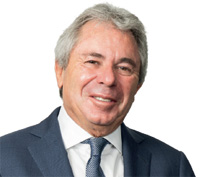
Key features The global economy was subject to substantial pressure during the review period, creating numerous challenges for an internationally diversified business such as Bidvest. Growth slowed significantly in emerging markets, a material factor for the Group as we have a growing presence in many of these economies. Despite these generally difficult conditions, our trading performance was highly commendable, especially in those geographies that faced particularly strong economic headwinds. Our headline earnings per share (HEPS) rose 8,6% to 1 882,2 cents (2014: 1 733,9 cents) while basic earnings per share (EPS) went up 25,0% to 1 827,3 cents (2014: 1 462,0 cents). Bidvest Foodservice returned excellent results, reflecting pleasing performances by most businesses and real organic growth in local currencies. Bidvest South Africa delivered satisfactory trading results despite tough economic conditions, with good performances at Electrical, Industrial, Paperplus, Services, and Rental and Products. Bidvest Namibia experienced a further decline in trading profit, lower contributions by fishing and food distribution outweighed improvements in the industrial and commercial businesses. Group turnover rose 11,6% to R204,9 billion (2014: R183,6 billion) and the trading result improved by 11,7% to R9,6 billion (2014: R8,5 billion) while our trading result margin held steady at 4,7%. Headline earnings rose 11,3% to R6,1 billion with profit for the year up 27,3% at R6,2 billion. Acquisitions Within the food group, the breadth and geographical reach of operations in the UK and Europe were significantly expanded through the acquisition of Gruppo DAC S.p.A. (DAC) in Italy and PCL 24/7 Transport Limited (PCL) in Britain. DAC is a leading foodservice provider, while PCL is a specialist chilled products storage and distribution business. With effect from July 1 2014, the Group bought a 60% interest in DAC and a 75% stake in PCL for an aggregate purchase price of about R1,7 billion (£95 million). Later in the year, we paid a further £15 million for the remaining PCL equity. We have the option to increase our DAC holding over time. At Bidvest South Africa, several smaller acquisitions were undertaken, and disposals included the sale of Protea Coin’s Cash-In-Transit business and Océ, the digital printer supplier. Adcock Ingram Pursuant to an offer to all shareholders at a price of R52,00 per share, Bidvest purchased a further 8,4% stake in the net ordinary share capital of Adcock Ingram. This R737 million transaction took our total stake in the pharmaceutical company to 43%. Post-year-end, Bidvest acquired a further 2,6 million Adcock Ingram ordinary shares from the company’s previous black economic empowerment partners at a cash price of R52,00 per share. The Group then endorsed new BEE arrangements at Adcock by selling 15% of our Adcock shareholding to these new black partners. Following these transactions, the Group holds 37,7% of Adcock’s net ordinary shares in issue. Bidvest remains optimistic about medium-term prospects, though further work is needed before Adcock reaches its potential. Prospects In recent years, difficult trading conditions and sometimes volatile markets have confirmed the fitness for purpose of Bidvest’s entrepreneurial and decentralised business model. We remain confident our approach gives us the flexibility to exploit opportunities in unpredictable economic conditions. Attitude is also important. A well-motivated team is challenged by adversity, not cowed by it. Conditions will remain difficult in South Africa and other emerging markets for some time. Even so, management remains focused on maximising returns across all businesses. We intend to deliver real organic growth and unlock synergies, and realise improved returns on our recent investments Our balance sheet is strong, so is cash generation, giving us the capacity to pursue further acquisitions to complement continued organic growth. Our “proudly tomorrow” positioning underlines our conviction that the future is positive for Bidvest. We maintained momentum in 2015. We plan to sustain it in the year ahead, bolstered by anticipated benefits from recent acquisitions and investments. Here in South Africa, innovation continues across all teams. We are expanding our product and service offering while broadening our exposure to FMCG distribution. Specific growth opportunities have been identified and will be vigorously pursued. We remain alert to the prospects across the African continent and we will continue to explore areas of opportunity. Progress to date has been modest in sub-Saharan markets, however, going forward, alternative strategies to speed up penetration will receive increased attention. In our food group, strategic exposure to developing markets presents exciting opportunities. Despite some worrying economic developments, we are particularly excited by potential in Latin America and China. Across all our Foodservice businesses, opportunities exist to add product ranges and expand local footprints. For their part, newly acquired DAC and PCL present excellent platforms for further expansion in their respective markets. The strategic quest for balance between our national and independent foodservice customers remains a priority. Growth of the national footprint and the fresh food offering remain focus areas in almost all regions. Strategy, structures and succession Bidvest has always prized flexibility. We are never rigid in our approach, whether at a tactical or strategic level. We are proud of our South African roots and our place on the JSE. At the same time, we have become a global business with further international growth on the horizon as our food businesses achieve critical mass. Our criteria will always be what is best for the business, shareholders and other stakeholders. The Bidvest track record indicates that our strategy and business model have delivered meaningful gains to all stakeholders over many years. However, there is never room for complacency at Bidvest and we constantly scrutinise the effectiveness of all management interventions. Specifically, we continue to review Group and divisional structures to ensure we have the right platform from which to pursue continued growth and meet the challenges of an ever-evolving world. Any changes are aimed at creating synergies for customers, streamlining operations and assisting in succession planning at senior management level. Agility remains important across our businesses. Therefore, we will continually strive to refine and develop a model that is designed for overall efficiency and long-term growth. While our future structure must continue to generate sustainable, long-term returns for all stakeholders, it must also position Bidvest for ongoing organic and acquisitive growth. A further requirement of our amended structure will be the continued delivery of robust cash flows and dividend payments. Across all businesses in all geographies, timely succession planning remains a priority. At all levels, energetic leaders are in place, supported by a new wave of managers steeped in the Bidvest culture and fully capable of taking the business forward. Bidvest brand Though Bidvest remains adaptable and innovation characterises every aspect of our business, it is surprising how few things change within the DNA of the organisation. We still attract people who take the initiative and are not afraid to make themselves accountable. We still operate without frills and pretensions. What has changed is the public perception of Bidvest. Substantial investment in the Bidvest brand has taken place in recent years. The Bidvest name is now linked to scores of businesses in multiple sectors in dozens of countries. Bidvest’s involvement in South African professional soccer has simultaneously given us a profile away from the business arena. Not every South African supports Bidvest Wits, but the scale of public goodwill toward Bidvest is very gratifying. Great ideas In South Africa we have no shortage of great ideas. The challenge for South Africans is how best to turn the vision into reality. Social and economic transformation to ensure we harness the talents of all South Africans is one great idea. It is absolutely vital, therefore, that a proper policy of black economic empowerment be made to work. We all have a duty to move the strategy forward. The key word is empowerment. The overarching aim of black economic empowerment should be to create well-educated, well-trained, independent-minded and confident men and women suitably equipped to seize opportunities and create a better future for their families. Individuals like this are self-starters and go-getters. Another great idea is the recent concept of a fast-track for black industrialists. We need more entrepreneurs to enter the industrial space, and black African entrepreneurs can really spur transformation; not only by creating jobs, but also by setting an example. However, we must keep in mind that industrialists who build thriving businesses do so through their own energy and vision. They assess risks, manage them and secure profits by creating quality products at a competitive price. Risking your own money is a key component of this process as the risk of loss keeps you focused and working hard. State enterprises The state’s recent record of growing thriving enterprises is not encouraging. Indeed, the substantial losses suffered by many stateowned enterprises (SOEs) have become the subject of national debate. The problems at Eskom, our monopoly power supplier, sharpen this discussion as regular power outages have impacted the performance of business and the economy at large. Fundamental questions need to be asked. What is the goal and role of SOEs? How should performance be measured? Bidvest is familiar with the task of reinvigorating under-performing assets and creating environments in which people can lift their game and grow. Our experience indicates that when seeking performance improvements it is often helpful to go back to basics. The prerequisite for SOE reinvigoration should be a fundamental reappraisal of what they are in place to do. In my view, certain SOEs have a major role to play in a developing economy as engines of service delivery. Mass privatisation of every state activity is simply not appropriate. The private sector is not positioned for involvement in every segment of the economy. After all, private companies only willingly engage in activities that will deliver a meaningful return on investment. Some activities are essential, but the prospect of profit is unlikely; for instance, basic postal services across all communities, including those in remote rural areas. Provision of major items of infrastructure is another area where state involvement is vital; for example, road and rail networks, new ports and dams. Where government sets a clear vision and focuses purely on delivery for the good of the country, the results can be impressive. A national challenge Corruption is in danger of becoming a national blight. Corruption is a cancer. It spreads and denial only makes things worse. The longer it persists, the deeper it goes. Radical, painful processes are then necessary to cut it out. Though corruption has become a national challenge, it is also a very personal issue. As the cancer spreads so the likelihood grows that each one of us will face some tough choices. Do you pay so-called “lunch money” to avoid a fine for having a faulty brake-light? Or do you refuse to take the easy way out? South Africans can no longer duck ethical questions like this. Corruption is not only something for the media to sort out, or Parliament, or the Public Protector. We all have a duty to take a stand – perhaps as a motorist or as a person in business. Fudge that responsibility and the long-term consequences will be very severe indeed. Trade unions The business conversation about industrial relations tends to be too narrowly focused. Typically, the debate centres on strike action and its impact on national growth and company performance. We should not forget the positive role the trade unions have played in this country. They were one of the engines of change and had a major role in bringing a peaceful end to apartheid. Too many South Africans for too many years had no voice. The unions helped to change that while seeking a new deal on pay and conditions. Greater regard for the achievements of the trade union movement will enable a more constructive dialogue with workers’ representatives. That dialogue should take place more frequently. Currently, there is a tendency in South Africa for close engagement with the unions to take place only when wage talks get underway. If wages are the sole or primary area of focus, an element of confrontation is unavoidable. Pay negotiations can easily become a zero-sum game. More for you means less for me. In these circumstances, it is hardly surprising that adversarial position taking becomes the norm. Businesses, industries and the nation at large would benefit if interaction in the workplace between unions and executives was much more wide ranging. Any company truly committed to business sustainability will find a lot of common ground with serious trade unionists. Business needs skilled personnel. Union members are looking for skills training and proper career development. Reputational risks and the need for higher productivity focus management attention on the need for a safe, productive working environment. Unions want the same thing. In many areas it is possible to create a sense of shared mission. This process requires constant interaction; week by week, month by month. Positive chemistry between individuals and a sense of partnership will then create a more constructive industrial relations climate. The long-term effect would almost certainly be fewer confrontations and more fruitful discussions. At the moment, South Africa is a long way from this type of interaction. This does not mean we can not make a start along this road; and the sooner the better. People In difficult business conditions, companies will always seek savings. However, it is important for management to show a broader sense of responsibility when cutting back. Too often, too many businesses think cutting costs must mean cutting jobs. On occasion, this might be the case, but every exercise to trim the cost-base should not start and stop with job cuts. In a tough year, Bidvest streamlined some businesses and consolidated others, but service improvements and cost savings were achieved without engaging in major retrenchment exercises. We are proud of that. Appreciation I extend my heartfelt thanks to every member of every Bidvest team. You are the reason the Group continued to grow in 2015, despite trading difficulties at home in South Africa and around the world. Marketplace challenges are unlikely to disappear in the year ahead, which is why I am grateful for the support of such dedicated staff and managers. You have always committed to the long haul and you have always driven us forward. I am proud to be on your team. I extend further thanks to another extremely cohesive and hard-working team – the directors of the Bidvest Group. Our chairman, Lorato Phalatse and the board once again provided unstinting support and strategic insight during a challenging period. It is a privilege to serve alongside you. Brian Joffe |
Registered office South Africa |
|
|
|

