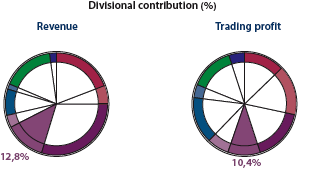
Performance
The division comprises four
businesses: Bidvest Australia,
Bidvest New Zealand, Angliss
Singapore and Angliss Hong
Kong. Exceptional divisional
results were achieved, with
a 63,2% increase in revenue
to R14,5 billion while trading
profit rose 59,1% to R551,4
million. For the first time,
the figures reflect the full-year
contribution of the Angliss
businesses. Figures in rand
are also inflated by depreciation
against local currencies.
Even in local currency terms,
the results were well ahead
of expectations. Revenue at
Bidvest Australia rose 17,5%
to A$1,4 billion while trading
profit moved 24,6% higher to
A$55,7 million (2007: A$44,7
million). At Bidvest New Zealand,
trading profit rose 17,0% to
NZ$16,8 million off revenue
of NZ$383,9 million, a rise
of 17,9%. Angliss Singapore
posted trading profit of S$10,7
million from revenue of S$314,2
million while Angliss Hong
Kong and China achieved profit
of HK$45,5 million from revenue
of HK$1,4 billion.
Strategic drivers
Each jurisdiction is distinct,
but all were affected by common
themes such as rising business
uncertainty, higher interest
rates, sometimes exceptional
food inflation, falling consumer
confidence and tighter credit
conditions. Another common
theme was strong growth in
the first three quarters followed
by an abrupt slowdown toward
year-end. High employment in
all markets underpins consumer
demand. The downside is that
wage rises generally exceed
prevailing inflation.

The Australian and New Zealand
businesses benefit from the
continuing eating-out trend
while the Angliss units are
major beneficiaries of the
Asian trend toward greater
variety in meal choices, with
a growing preference among
middle and upper-class families
for some Western-style foods.
The Angliss businesses have
a trading bias and were well
positioned to protect margins
by strategic buying in of food
stuffs that were subject to
high inflation. They trade
in sophisticated food options
and product lines with higher
meat and dairy content rather
than staples. Therefore, they
were not exposed to the high
volatility of the rice market
when a world shortage took
hold.
Angliss management at both
Singapore and Hong Kong have
adapted well to Bidvest’s decentralised
and entrepreneurial culture.
No senior managers have been
replaced in either team, indicating
how well the change of ownership
and transition to a new culture
has been managed.
BIDVEST AUSTRALIA
The global commodity boom
continues to drive strong economic
growth, though industrial and
service sectors with no direct
exposure to commodities show
signs of a slowdown and are
increasingly cautious in their
projections. Consumer confidence
is down and by late in the
year retail sales appeared
to have stalled.
Industry factors
Eating out has become part
of the Australian lifestyle
and restaurant visits continued
unabated despite growing pressure
on consumers. The first signs
of down-trading by consumers
occurred late in the period.
The Australian foodservice
industry remains fragmented.
As consumers move to more affordable
options, our local divisions
– foodservice, QSR (quick service
restaurant) and hospitality
– are positioned to achieve
competitive advantage in view
of their greater reach and
resources.