


Bidfreight
|
|||
One trend is a swing from air- to sea-freight. Consumer appetite appears to have dulled for electronic appliances and other high value items suited to air-freight. In future, more cautious consumers may extend replacement cycles on discretionary purchases. In contrast, demand for basic commodities, petroleum and agricultural products is underpinned by a growing world population and Asian industrialisation. Our recent investment in air-freight capacity at OR Tambo International Airport is long term and predicated on the growth of Johannesburg as a regional transport hub serving all of southern Africa. Steady growth is expected. Other regional trends support our investment in capacity at the coast. Zimbabwe will hopefully become a contributor to regional trade volumes over the next three years. South Africa’s rail infrastructure and ports remain the route to the world for local commodity exporters and those from DRC, Zambia and other nations. Considerable state investment will be necessary, however, if South Africa is to maintain its position as the continent’s biggest trade facilitator. We welcome the recent announcement that Transnet plans to increase its five-year capital expenditure programme to more than R80,5 billion. In the year ahead, we expect to see relatively strong volumes of copper and other bulk commodities, though containerised cargo, airfreight and local distribution volumes may remain weak. Bidfreight plans to continue on the growth path. Annualised double-digit growth will be targeted over a three-year period.
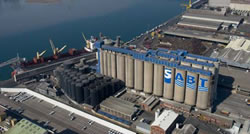
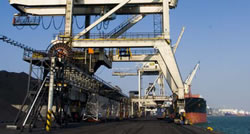
BULK CONNECTIONSVolumes of manganese and coal dropped sharply. Despite the drop in volumes, Bulk Connections produced a respectable profit. Operations are highly efficient and facilities have been expanded and modernised. Management will seek to grow coal and manganese volumes in the year ahead while pursuing opportunities to handle a wider range of products with a higher value. Lease negotiations continue. ISLAND VIEW STORAGEResults were good, with increases in revenue and trading profit. Tank utilisation remained extremely high and appropriate rates were negotiated. Continued profit growth is projected. Increased capacity is under development at Richards Bay and strong demand for our facilities is expected to continue. BIDFREIGHT PORT OPERATIONSIn a difficult year, storage charges and rentals helped to offset the effects of reduced exports of steel, forest products, ferrochrome and manganese. Despite increasingly difficult trading conditions, BPO made up the lost volumes by widening the customer-base, producing a very pleasing profit in line with the prior year. RENNIES DISTRIBUTION SERVICESThe business experienced a difficult year as volumes for core customers in the retail sector fell steeply. Results were significantly below expectations and restructuring was undertaken to reduce the cost-base. Unfortunately, some jobs were lost. Costs were reduced and by year-end the benefits of leaner structures were beginning to come through. Strenuous efforts are being made to achieve higher throughput across existing assets. An improvement in the domestic consumer economy is expected in 2010 and a return to solid profit growth is projected. SACD FREIGHTVolumes of containers contracted sharply. The reaction of SACD was to aggressively manage costs, resulting in a very credible performance which was only marginally down on the prior year. A rapid return to previously buoyant volumes is unlikely, but gradual recovery is expected in 2010 when work on the expanded Cape Town container park should be complete. SOUTH AFRICAN BULK TERMINALSSABT had a good year, achieving above-budget trading profits; a creditable effort from a relatively high base. Firsthalf wheat imports bolstered volumes and costs were well controlled. Early indications are that the coming year will get off to a good start as maize exports look promising. However, SABT confronts some strategic constraints. Rail capacity remains low and road congestion is becoming severe. NAVALOur Mozambican business faced severe competitive pressure. Coal and granite volumes fell while the port authorities cancelled our ferro- and sulphur contracts. Costs were cut and a modest trading profit achieved. SAFCOR PANALPINABillings fell dramatically as international clearing and forwarding felt the full impact of the contraction in world trade. Income on disbursements on behalf of customers was also affected by falling interest rates. As a result, the business did not achieve revenue and profit targets in a difficult year. Strenuous efforts were made to reduce costs and by year-end some benefit was being felt. However, no dramatic rebound in the forwarding sector is in sight and a flat 2010 is in prospect. |
|||
|
|||

Bidvest's vision lies in the realm of possibility
“Bidvest people put in a resilient performance and the Group achieved a creditable result.”
statement
“We refuse to participate in the recession and salute our employees for their efforts in exceptionally difficult trading conditions.”