


Bidfreight
Strategic dynamicsAs a provider of logistics solutions to importers and exporters, the strategic factor of concern is the growth (or contraction) in world trade. The global economic crisis and its impact on trade had a negative effect on our business. A report from the World Trade Organisation, published in March, confirmed what had been evident for some time. World trade fell sharply in the second half of 2008, though modest growth of 2% was still registered for the year. In 2007, international trade had grown by 6%. The speed of economic contraction was shown by rapidly changing forecasts. In January 2009, the International Monetary Fund predicted a fall in world trade of 2,8% for 2009. In the WTO’s March report its forecast for 2009 was a contraction of 9% – the largest slump since the Second World War. |
|||
|
|||
|
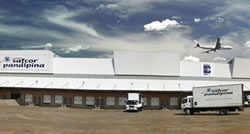
Despite falling economic growth, demand remained high for tank space for oils, gas and liquids. The fall in international freight volumes was particularly felt at Safcor Panalpina, our international clearing and forwarding business. Both air- and sea-freight volumes were impacted. Falling interest rates also reduced returns on Safcor Panalpina’s disbursements on behalf of its customers. However, Bidfreight’s diversified business model proved helpful in offsetting this impact. We not only provide solutions in the movement and handling of goods, our businesses also have considerable storage capacity at their disposal. As the movement of goods slowed, storage revenue provided some relief. Not all categories were affected equally by worsening trade conditions. The timing of impacts also varied. The rand weakened in the first half of Bidfreight’s year and volumes held up reasonably well until mid-December. The gathering recession then squeezed volumes while a rebound by the rand contributed to a fall in the export of manufactured goods. Some categories were hit especially hard (for instance, automotive products) while consumer belt-tightening reduced demand for distribution services to retailers. Falling world demand for commodities put a brake on exports of ferrous metals. Manganese exports came to a stop. However, volumes of basic commodities, bulk liquids and aid cargoes held up well. Brand dynamicsWe generally operate in a big-business-to-big-business environment. Brand dynamics on the FMCG pattern do not apply. We concentrate on the “Proudly Bidvest” positioning at divisional level. Individual corporate brands are highly respected in their respective spheres. Our “brand essence” is the trust built up over decades and our reputation as reliable partners. Operational dynamicsTeams concentrated on cost controls and stringent debtors’ book management as South African businesses felt the effect of the credit squeeze. A policy of non-replacement of staff was applied in a number of our businesses. With a small exception in RDS, retrenchments were avoided. Our businesses engaged in an aggressive quest for new business and showed their adaptability. Industry feedback indicates we have won market-share, surprising competitors with our eagerness to compete in non-traditional areas. New business gains included work for a large fertiliser importer, contracts relating to scrap metal and aluminium exports and export handling work on copper from the DRC. One operational challenge eased as volumes fell – that of dealing with the effects of port and road congestion. New initiativesWork began in June on an expanded and consolidated Cape Town site for SACD Freight’s container operations; a R150 million project. The scheme involves the transfer of operations from our currently cramped site to a nearby seven-hectare site. The new 20 000m2 warehouse will be complete by March 2010. The modern facility with improved access will help SACD pursue additional growth opportunities in niche areas such as the export of bottled wine. In April we started work on new chemical tankage at Richards Bay, earmarked for the products of a large petrochemical exporter. The R250 million project will add 61 100m3 to the tank capacity of Island View Storage. Completion will be in April 2010. We maintained our training investments, giving additional focus to environmental management. Risks to the businessCredit risk rose as the business environment worsened. Controls are already good, but we tightened up procedures, especially in areas where our debtors’ goods are not warehoused on our premises and we therefore do not have the security of a lien over the product. Exchange rates create risk and we take forward cover. The risk of a major industrial accident is ever present. In the past, investigations have shown that our safety standards are extremely high. We conform strictly to all industry safety regulations and we are obsessive about safety procedures in areas such as the movement and storage of hazardous materials. Concern has begun to increase about “the risk next-door”. Sites, roads, access points and port facilities have become increasingly cramped and congested. Without expansion, modernisation or proper maintenance of infrastructure, the risk of accident or injury may increase in the general vicinity of our sites, with the potential to affect our own operations. We are aware of the problem and communicate our concerns, but we can only manage risk on our side of the “fence”. |

Bidvest's vision lies in the realm of possibility
“Bidvest people put in a resilient performance and the Group achieved a creditable result.”
statement
“We refuse to participate in the recession and salute our employees for their efforts in exceptionally difficult trading conditions.”