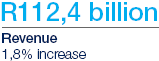



Bid Auto
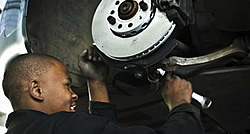
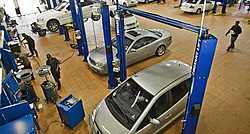
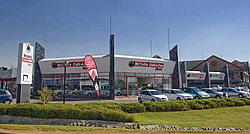
Industry dynamicsInternational and domestic experience confirms that business confidence is closely correlated with vehicle sales. South African business sentiment has deteriorated significantly and in March 2009 was at its lowest in 17 years. Consumer sentiment is also at a low ebb. Soft new vehicle sales weakened further with every decline in the confidence index. Credit extension is down dramatically. The credit clampdown on big ticket items is no longer just a function of rigorous compliance with the National Credit Act. The criteria applied by the banks are often more stringent than legal requirements. For example, the NCA does not demand a deposit when an applicant for credit wishes to make a purchase. In response to the rising number of non-performing loans and the deteriorating economic climate, financial institutions routinely reject credit applications on vehicles when deposits are considered insufficient. Historically, a majority of loan applications from McCarthy showrooms is approved. This year, our approval rate was down to one in four, even though we maintained the quality of our pre-approval processes. The industry-wide new vehicle market has shrunk by 36%. A strong run-up in sales over several years peaked in 2006 when 714 000 new vehicles were sold. Manufacturers predicted that by 2010 sales would top one million. The market has changed so dramatically in two years that even industry optimists now predict total new vehicle sales of just 400 000 in 2010, while sales for 2009 are expected to reach 360 000 units. Contraction is particularly evident in the heavy truck market. This sector is down by 60% on the previous year. The new vehicle market witnessed a swing toward well-established brands. Effects can be dramatic in view of structural imbalances. Our market is relatively small, suggesting there is room for a limited number of marques and models. However, many international companies view South Africa as the gateway to the greater African market and see a presence here as a springboard to wider opportunities. Consequently, our market has an abundance of car brands. In 2009, 57 brands were represented in South Africa, offering about 2 000 different models. The mismatch between market size and the size of the model “universe” had severe consequences for less well-established brands. Though the overall market decline for new vehicle sales was 36%, some less favoured brands saw sales plummet by more than half. Corrective action is complicated by lead times. The delivery pipeline is long. Units “on the water” have to be accommodated in due course on the showroom floor, maintaining pressure to move stock in even the most adverse conditions. In the first half, currency depreciation kept new vehicle prices high. When the rand strengthened, lead times meant there was little immediate relief on the pricing front. A swing to used vehicles occurred. Across the industry it is estimated that sales of used vehicles should grow by more than 5%. Brand dynamicsBid Auto offers the widest brand bouquet in the automotive market. The swing to well-established brands has already been noted. We support all our car brands with considerable investment without neglecting our own company brands. In a severe downturn, the strength of the core McCarthy brand was highlighted. McCarthy celebrates its centenary next year and is a byword for quality, value and service. Research confirms high awareness in the emerging market. This indicates that a strong platform is in place once trading conditions improve. Similarly, our warranty brand McSure is held in high esteem. This became an important factor in our successful used-vehicle marketing strategy as buyers took advantage of affordable prices, knowing the purchase was backed by a strong warranty. In a difficult year, we took full advantage of our position as South Africa’s only national used-vehicle brand. Strong sales momentum was maintained, resulting in a record year for our used-vehicle business. Another company brand, Burchmores is South Africa’s leading car auctioneer and again performed strongly as this form of purchasing gained greater market acceptance as bank repossessions mounted. Our brands generally achieve sector leadership or are recognised as extremely strong competitors. For example, Yamaha Distributors is a leader in the market for leisure equipment while Budget Car Rental is number two in its field. Operational dynamicsA critical challenge for management was to scale back operations, working capital and overheads in line with much smaller trading volumes, and do so as rapidly as possible. The value of our inventory fell by R400 million as rightsizing gathered pace. The number of outlets was cut from 140 to 120. The chain of McCarthy Value Serv was particularly hard hit. By year-end, only two of the 28 outlets were still operational. Seven Value Centres were also closed. These centres are the marketing and servicing channel for our imports (primarily Chery, Meiya and Foton). Sales of all Chinese newcomers to our market fell significantly. A surplus of Chinese entrants to the car, bakkie and taxi sectors made it difficult to establish product differentiation. Radical down-scaling was unavoidable. Bid Auto did not engage in wholesale retrenchments, although a “recruitment freeze” was imposed 18 months ago before the market slide began. Non-replacement and dealership closures saw staff numbers fall from 7 621 to 6 942. Expense management became top priority. Service business and parts sales increased markedly as demand rises when fleet and private buyers extend vehicle replacement cycles (a key feature of the current downturn). Some of our service centres remained open on public holidays and over weekends, offering value packages to customers. Within vehicle retailing, losses often had to be taken on slow-moving, excess inventory as price became the key factor in every buying decision. Our size and resources enabled us to add value to the deal and maintain some sales momentum. For example, buying a used car from us became a no-risk transaction as we certify vehicle ownership and mileage while providing extended warranties and membership of Club McCarthy (a programme offering free roadside assistance, among other benefits). At what may prove to be the bottom of the market in April, we timed major promotions to coincide with the succession of long weekends. Traditionally strong car brands drew most benefit as the public went for established favourites at favourable prices. Used vehicle sales through our online showroom (McCarthy Call-a-Car) were also optimised. Sales of up to 700 units a month were driven through our search engine.
|


Bidvest's vision lies in the realm of possibility
“Bidvest people put in a resilient performance and the Group achieved a creditable result.”
statement
“We refuse to participate in the recession and salute our employees for their efforts in exceptionally difficult trading conditions.”