Operational reviews – Bidvest Deli XL Netherlands
Bidvest Foodservice
Europe |
 |
Dick Slootweg:
Managing director |
|
| |
|
|
Highlights
 |
Officially certified by auditor Lloyds Register for
ISO 14001 |
|
Growth of turnover in hospitality |
|
Continued overhead reduction programme |
|
Published our fifth sustainability report |
|
49% share in VCN (Zorgboodschap) |
|
Subway, Prorest and SAB as new customers
acquired. |
Innovation and new investment
|
Included our CSR-measurement system in our vendor
rating process |
|
Completed certification process of the ISO 14001
management system |
|
Launched our Foodscan app |
|
Investment in electrical distribution vehicle in Amsterdam. |
|
|
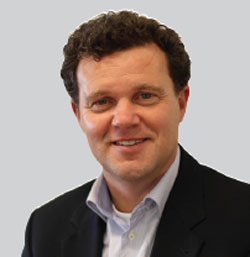 |
| Dick Slootweg – Managing director |
|
Disappointments and challenges
|
Re-establishment of robust IT environment |
|
Adaption to declining care and cure market |
|
Improve the work culture in the central distribution
centres. |
Target 2015
|
Improve EBIT by 20% |
|
Include sustainability in daily work practices. |
Material issues and performance
 |
| Product

Minimise product impact
and ensure food safety
|
|
Why:
 |
Foods have a high environmental and health
impact. It is important to ensure food products
are responsibly and safely sourced, manufactured
and distributed |
|
Ensuring product supply integrity (eg horse meat scandal)
|
|
KPIs:
|
100% sustainable
alternative |
|
Sites are 100% HACCP
certified |
|
90% of sourced volume
is sustainable |
|
|
At Bidvest Deli XL, responsibly sourcing remains an
important item. |
|
We have created a concept on sustainable products. Within
this concept, we promote organic products, as well as
other sustainable alternatives. |
|
Bidvest Deli XL works according to a food safety
management system (HACCP) to guarantee the freshness
and the integrity of products. |
|
We asses our suppliers with our CSR measuring system,
which tells us how sustainable their processes are. With
this approach we aim to accomplish the 90% objective. |
|
| Minimise impacts of poor
harvests and animal
diseases |
|
|
|
We apply to all Dutch/European law and regulation on this
subject. |
|
|
|
|
|
| Planet

Reduce environmental
impacts |
|
Why:
|
Environmental issues, such as climate change,
pollution and water scarcity |
|
These issues also potentially threaten food
supplies |
Objective:
|
To reduce our impact, educate employees,
and work with suppliers and offer solutions to
customers to help them reduce their impacts |
|
KPIs:
|
Carbon emissions
(Scopes 1, 2 and 3) |
| We strive to have reduced our CO2 impact with 20% in
2015 (compared to 2008). At this moment we have already
reduced 13%. |
|
|
| |
| Greenhouse gas emissions |
2012 |
2013 |
2014 |
| Carbon total (tonnes of CO2) |
NA |
NA |
22 972 |
| Diesel usage (Mℓ) |
4,7 |
4,8 |
4,7 |
| Electricity usage (GJ) |
69 164 |
71 717 |
61 203 |
| LNG (kg) |
944 000 |
1 027 380 |
1 186 702 |
|
Stakeholder engagement
|
| STAKEHOLDERS |
|
OBJECTIVE AND ENGAGEMENT
METHOD (AND FREQUENCY) |
KEY ISSUES IDENTIFIED |
KEY ACTIONS TAKEN AND PLANNED
(more detail may be provided in material issues tables and elsewhere) |
|
|
|
|
|
| People

Employees (full-time and
contract)
|
|
Objective:
|
Improve employee relationship and
satisfaction |
Methods:
|
Employee surveys (annual) |
|
Anonymous feedback forms (ongoing) |
|
Communities on Google+ (ongoing) |
|
Key issues :
|
Remuneration and benefits, being
informed about corporate strategy,
employee skills development, employee
wellness, local economic development
and specific employer/employee
relationship issues |
Issues considered material:
|
Employee wellness, skills development
and retention |
| The key actions we have taken towards the
wellbeing of and to improve the relationship with
the employees are:
|
Employee survey (light version) |
|
Health check |
|
Discount on gym membership |
|
Help by quitting smoking |
|
Discount on health insurance |
|
Buying bikes with tax benefits |
|
Education |
|
| Unions and Labour Council |
|
Objective:
|
Maintain good union relationships (annual) |
|
Labour Council meetings (monthly) |
|
Key issues :
|
Remuneration and benefits, corporate
strategy, employee skills development,
employee wellness and local economic
development |
| We have informal and formal meetings with
the unions and the Labour Council on a regular
basis. By doing so, we maintain the good
relationship with them |
| Suppliers |
|
Objective:
|
Maintain good relations. |
|
Understand issues and resolve these
together |
|
|
We organise suppliers days on a regular basis
to provide them with new information, organise
stakeholder meetings to discuss certain subjects
(ie CSR), and we organise an annual fair to
strengthen the relationship between us, the
suppliers and our customers |
| Customers |
|
Objective:
|
Understand evolving needs, expectations
and issues |
|
|
|
We have a customer satisfaction survey
each year |
|
We started a large project, called Customer
Happiness, in order to improve our knowledge
of our customer needs |
|
We introduced a market segment approach |
|
Communities
 |
Local communities |
|
Particularly community
subsectors (eg sports,
education, infrastructure) |
|
|
Objective:
|
Better understand and collaborate with
the communities in which we operate |
|
Key issues:
|
Local economic development and
employment opportunities, education
(schools), skills development, health and
environment |
Material issues:
|
Socio-economic development and
community involvement |
|
|
Our local community is very important to us.
We purchase the majority of our products in
the Netherlands, and with our concept Vers
247 (Fresh247) we collaborate explicitly with
local farmers. At this moment, 100 farmers
have joined the concept. |
|
Furthermore, we provide assistance to
schools with our school plan in order to bring
better and healthier food to adolescents. |
|
In addition, our regional distribution centers
organise/participate in small projects (ie
sports) and annually we organise a day trip
with the clients of one/two of our customers
(nursing homes). |
|
|
|
|
|
|
| Planet
Environmental stakeholders
|
(eg environmental NGOs,
government agencies,
communities, research/
academic organisations) |
|
|
Objective:
|
Understand issues, needs and
expectations |
|
|
We keep close contact with the municipalities
in which we operate, meet on a regular basis
with different ministries of the government, keep
close contact with multiple (food) universities,
and we are an active member of multiple
networks and sector associations.
|
|


