Operational reviews – Bidvest Fresh
Bidvest Foodservice
Europe |
 |
|
Stephen Oswald: Managing director |
|
| |
|
|
| Bidvest Fresh is the leading specialty provider of fish, meat
and produce in the UK. The business operates through 11 sites
across the UK supplying products from local markets, as well
as imported items. The businesses supplies discerning chefs
that appreciate quality fresh products. |
|
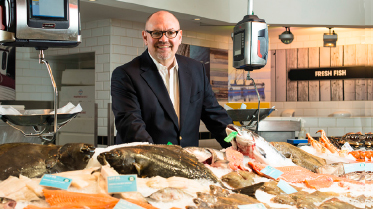 |
| Stephen Oswald – Managing director |
|
Highlights
 |
Net sales increased 31,1%, normalised
PY 21,1% (8,7% organic) |
|
Operating profit up over 49%, normalised PY 30,3%
(9,6% organic) |
|
Fish business drove most the organic growth |
|
Grew customer base, increased average spend
and increased average drop value |
|
Acquired meat business as first step in the
expansion into this market. |
Innovation and new investment
|
Campbell Brothers acquired December 2013 to expand
product range into meat and extend produce and seafood
further into Scotland |
|
“Buy direct” campaign continuing with 31% of all products now
sourced directly from origin |
|
Re-emphasising that the business is small, local and specialist |
|
Bidvest Fresh sales model launched to increase outbound
customer sales with e-commerce solution being implemented
to soak up more of the inbound “order taking” sales. |
Disappointments and challenges
|
Fine food business folded into produce business |
|
Buy direct campaign has been a steep learning curve and is
now starting to bear fruit |
|
Build work required at Campbells. |
Changes in operational environment
|
Increasing demand for sustainability credentials – met by our
proactive sustainability team |
|
Increasing demand for locally sourced produce. We are
strengthening our direct links with these supplier groups |
|
Increasing demand for direct delivered fresh products. |
2015 targets, objectives and factors
affecting future results
|
Expand sales in low-penetration regions |
|
Roll out e-commerce platform. |
Risks and responses
|
Low-margin customers with national set menus continue to be
an issue – addressed by closer work on menu development
and taking a proactive role to influence core menu lines |
|
Core product prices not stable – continuing to develop
contracts to establish a solid base price |
|
Growing number of NGOs, personalities and governments
providing sustainability credentials and/or opinions that
contradict one another in scope and definition. Many require
differing “chain of custody” procedures. Failure to meet a
standard can have an adverse effect on segments of our
customer base. |
Material issues and performance
| MATERIAL ISSUE |
|
WHY IT IS IMPORTANT AND
STRATEGIC OBJECTIVES |
KPIs AND TARGETS |
PERFORMANCE AGAINST TARGETS AND
ACTIONS
GOING FORWARD |
 |
| Performance

Maintain consistent
financial performance
|
|
Why:
 |
Global economic challenges |
|
Lower consumer confidence |
Objective:
|
To maintain profitability |
|
|
General cost containment |
|
Maintain margin |
|
Product cost containment |
|
|
General costs as a percentage of net sales 25,9%
(prior year 25,9%) |
|
Margin has improved at 33,4% (prior year 32,85%) |
|
Product cost managed by buying direct, 31% of all stock
is purchased directly from source compared to 25,8%
last year |
|
|
| People

Exceed corporate
citizenship expectations |
|
Why:
|
It is important to demonstrate our commitment as
a good corporate citizen by consistently exceeding
local and international governance, compliance
and broader sustainability expectations |
|
KPIs:
|
Local community
investment |
|
NGO support |
|
Certifications |
|
|
Increasing spend on local community investment in
schools and clubs and chef sponsorship |
|
Certifications currently held, Organic, Red Tractor, Freedom
Foods, MSC chain of custody, and BRC 6 |
|
Injury rate 40 against prior year 53 |
|
| Maintain rigorous safety
standards |
|
Why:
|
It is our obligation to ensure the safety of our
employees |
Objective:
|
Ensure all businesses demonstrate exceptional
levels of safety performance |
|
KPIs:
|
Injury rate |
|
Lost-day rate |
|
|
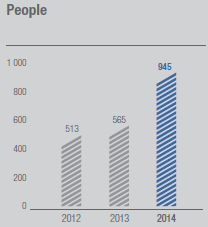
Resignation rate 24,5% against prior year of 12,4%. The
business has had to address a number of issues this year |
|
Promote employee
health and satisfaction
Enhance talent
attraction and retention |
|
Why:
|
People have a right to be healthy and happy. As
employers we assist our staff in this regard, which
contributes to a more productive and positive
work experience |
|
To improve talent attraction and retention |
Objective:
|
To use innovative approaches to improving the
health and wellbeing of all employees and create
a positive work environment that enhances talent
attraction and retention |
|
KPIs:
|
Resignation rates |
|
Absentee rates |
|
|
£391 000 spent on staff welfare against £265 000
prior year |
|
|
| |
 |
|
| Product

Minimise product
impact and ensure food
safety |
|
Why:
|
Foods have a high environmental and health
impact. It is important to ensure food products are
responsibly and safely sourced, manufactured and
distributed |
|
Ensuring product supply integrity (eg horse
meat scandal) |
|
KPIs:
|
Failed food safety tests |
|
Failed DNA tests |
|
|
0 (prior year 0) failed tests |
|
0 (prior year 0) product withdrawals |
|
No failed DNA tests |
|
|
| Product

Reduce environmental
impacts |
|
Why
|
Environmental issues, such as climate change,
pollution and water scarcity |
|
These issues also potentially threaten food
supplies |
Objective:
|
To reduce our impact, educate employees,
and work with suppliers and offer solutions to
customer to help them reduce their impacts |
|
KPIs:
|
Reduce water usage |
|
Reduce fuel consumption |
|
Reduce electricity
consumption |
|
|
£231 000 spent on water against £187 000 prior year, we
have opened an additional depot |
|
Cost of fuel per vehicle decreased by £1 800 from prior
year to £10 200 |
|
£695 000 spent on electricity and gas against £563 000
prior year, there has been an increase in cost per
kWh of 11,1% to prior year and we also opened an
additional depot |
|
|
| |
| |
2012 |
2013 |
2014 |
|
| Water usage (Mℓ) |
57,2 |
67,6 |
99,0 |
| Diesel usage (Mℓ) |
1,2 |
1,6 |
2,2 |
| Paper usage (kg) |
38 400 |
41 200 |
55 055 |
|
Stakeholder engagement
| STAKEHOLDERS |
|
OBJECTIVE AND ENGAGEMENT
METHOD (AND FREQUENCY) |
KEY ISSUES IDENTIFIED |
KEY ACTIONS TAKEN AND PLANNED
(more detail may be provided in material
issues tables and elsewhere) |
|
| People
Employees (full-time and
contract)
|
|
Objective:
|
Improve employee relationship and
satisfaction |
Methods:
|
Employee engagement |
|
Employee “meet the CEO” meeting. |
|
Social media tool |
|
Newsletters |
Objective:
|
Maintain good relations |
|
Understand issues and resolve these
together |
Objective:
|
Understand evolving needs, expectations
and issues |
|
Key issues:
|
Remuneration and benefits, being
informed about corporate strategy,
employee skills development, employee
wellness, local economic development
and specific employer/employee
relationship issues |
Issues considered material:
|
Employee wellness, skills development
and retention |
|
|
Implemented global pension fund in line with
government requirements |
|
Conducted “meet the CEO” meetings with
all sales staff – extending to all staff in the
new year |
|
Implemented Yammer as social media
communication tool |
|
Regional work groups being implemented that
connect the internal value chain component to
ensure improved customer service |
|
Regular local newsletters |
|
| Suppliers |
|
|
Key issues:
|
Promote payment |
|
Sustainable sourcing |
|
|
Greater than 98% off payments made within
terms |
|
Increasing dialogue to manage sustainable
sourcing options |
|
| Customers |
|
|
Key issues:
|
Increase emphasis on sustainability –
reduce embarrassment potential |
|
Reduce cost while improving service
and quality |
|
|
Increased internal efforts to drive sustainable
purchasing |
|
Increased internal efforts to drive local
sourcing |
|
Driving efficiency gains |
|
Communities:
 |
Local communities |
|
Particularly community
subsectors (eg sports,
education, infrastructure) |
|
|
Objective:
|
Better understand and collaborate with
the communities in which we operate |
| Local economic development and
employment opportunities, education
(schools), skills development, health and
environment
Material issues:
|
Socio-economic development and
community involvement |
|
|
Engage with local communities |
|
Staring an apprenticeship scheme to
increase employment opportunities in local
communities |
|
|
| Product
Environmental stakeholders
|
eg environmental NGOs,
government agencies,
communities and
research/academic
organisations |
|
|
Objective:
|
Understand issues, needs and
expectations |
|
Key issues :
|
Promotion of sustainability issues |
|
Promotion of responsible sourcing |
|
|
Direct engagement with: Marine Stewardship
Council, Marine Conservation society, WWF,
Sustainable Restaurant Association, Freedom
Foods (RSPCA), Seafish Authority, ASC, GAA,
Sustainable Fish City, Sustainable Seafood
Coalition and Project Inshore |
|
|

