Leadership
Executive committee
The Group Exco consists of twelve members, including the Group executive directors and functional executives covering strategy, finance, transformation, ESG, business development, as well as the seven divisional chief executive officers. The Group believes that its decentralised governance structure supported by experienced management, many of whom are specialised in particular sectors or industries, leading the day-to-day operations of the businesses, positions the Group well for the continued focus and execution of its key strategic initiatives. As a result, most of the members of the Group's senior management team (whether focused on individual businesses, divisions or the Group as a whole) are heavily rooted, not just in the relevant industry or industries from decades of prior experience, but also in the Group's journey to the diversified business that it is today.

Ilze Roux (48)
Corporate Affairs executive

Phathu Tshivhengwa (40)
Corporate Finance executive

Akona Ngcuka (42)
Services South Africa chief executive

Alan Fainman (59)
Services international chief executive

Wiseman Madinane (54)
Freight chief executive

Hannah Sadiki(57)
Financial Services chief executive

Howard Greenstein (59)
Commercial Products chief executive

Steve Keys (61)
Automotive chief executive

Kevin Wakeford(62)
Branded Products chief executive
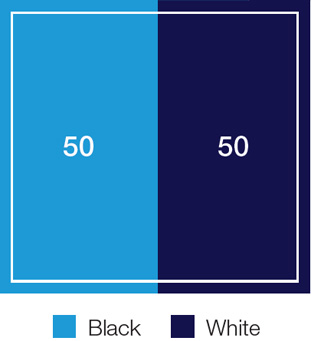
Race (%)
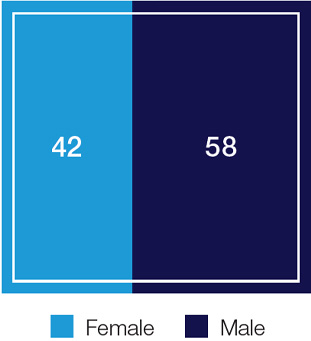
Gender (%)
Tenure (number of members)

How the functional Bidvest governance structure works
Bidvest is a decentralised group whose success is, in part, attributable to allowing managers to run the businesses as if they are their own. Cluster, divisional and corporate office layers provide oversight, guidance, strategic direction and consolidated reporting. Living our core values of accountability and integrity everyday, in everything we do, is critical in successfully upholding our functional governance structure. The ethical onus on the Bidvest family is higher than in a more structured environment. We understand our responsibility.
Material business processes, controls and risks are monitored and assessed through a combined assurance model. Management, Internal Audit (IA) and external audit, ALICE as well as non-executive directors all play a role.
ALICE, an autonomous artificially intelligent capability/robot, runs on a scheduled frequency (continuously, daily, weekly, monthly or quarterly) as deemed fit for purpose based on the maturity, complexity and posture of the IT environment of each company within the Group. The IT findings are available to management on a continuous, remote and near real-time basis. Remediated IT findings are re-audited by ALICE upon receipt of updated audit evidence. The IA team follows up on unresolved findings on a monthly basis. The scope of assurance provided by ALICE is tailored per company based on integration and accessibility of data and can include User Administration Digital Audit Procedures, Cybersecurity Digital Audit Procedures, Microsoft Baseline Network Configuration, Password Configuration, Patch Management, Website & Certificate Management, etc.
Combined assurance receives deliberate and focused attention at Bidvest. Continually optimising our combined assurance model avoids duplication, rationalises collaboration efforts upstream amongst assurance providers, coupled with effectively managing assurance costs. The activities are coordinated to maximise the depth and reach of assurance achieved by each of the assurance providers. This enables an effective control environment and ensures the integrity of information used for reporting and decision making. The Audit committee ensures that our combined assurance model adequately addresses Bidvest's risks and material matters through the aggregated efforts of assurance providers. An independent review of the combined assurance model was conducted in the year under review through which the robustness and reliability of the same was confirmed.
The IA function is an independent, value-adding, progressive and responsive service to Bidvest shareholders. It fulfils a role of objectively evaluating the business processes and controls so as to appropriately manage the risk and support management's commitment to a strong control environment and operational excellence. The IA function is well-constituted with a professional audit staff (in excess of 25 Chartered Accountants in managerial positions) with sufficient knowledge, skill set and experience to execute on the board approved IA Charter that is consistent with the Institute of International Auditors' definition of IA as well as the principles of King IV.
Bidvest currently has approximately 250 operating entities, some of which have an extensive branch network. Each branch and entity are responsible for its own P&L, balance sheet and cash flow statement. On a monthly basis, financial flash results are rolled up from branch, through the business, cluster and divisions to group level by the fifth business day of the next month, followed by a detailed aggregation by the third week. Cluster management review the results in granular detail with operational management ahead of meeting with the divisional chief executives to discuss the results, operational matters and any other matters. The divisional chief executives then meet with the Group chief executive on a one-on-one basis to scrutinise performance and discuss pertinent matters.
Financial processes and controls
Quarterly, divisional Audit committee meetings are chaired by an independent non-executive attended by operational management, divisional CFO and chief executive, Group CFO, IA as well as external audit. These meetings consider and review the following:
- Report back from IA on the design and operating effectiveness of controls tested during the quarter in accordance with the board-approved, risk-based internal audit plan;
- IA's divisional assurance overview and conclusions on the control environment;
- IA Findings Tracker monitoring of all identified control weaknesses to resolution. Systemic and recurring control weaknesses are elevated, and root cause analysis presented. Fit‑for‑purpose remedial action is suggested to management;
- External audit report on work conducted during the quarter, any control deficiencies identified and potential risk areas that require specific scrutiny;
- Results, observations and remedial action taken on the back of security hygiene controls monitored by ALICE;
- Signed management representation letters attesting to the soundness of financial controls and proper governance in place;
- Schedules of losses incurred as a result of fraud, material exposures, and conflicts of interest;
- Status updates on current IT projects; and
- Divisional risk registers and /or risk meeting minutes.
The Group Audit committee, chaired by an independent non-executive director and attended by the Group CFO, Head of IA, external audit and the divisional Audit committee chairs, meets quarterly to deliver on its mandate of oversight and fulfil specific requirements as set out by the Listings Requirements. The committee has a rolling annual agenda with particular focus on the IA plan in Q1, interim results in Q2, goodwill impairment and the external audit plan in Q3 followed by the year end results in Q4. The last quarters' work is stretched over two days to allow the committee to consider:
- Reports from the Group CFO on the consolidated financial results, performance against the budget, the liquidity and solvency position of the Group, top 50 debtors and inventory analysis across the Group, a going concern assessment as well as an update on corporate action(s);
- Divisional Audit committee chairman reports on key matters raised in the divisional Audit committee meetings as well as any legal cases;
- The consolidated IA report dealing with the progress of reviews against the approved IA plan, recalibration of the approved IA plan based on ongoing risk assessment per company, particular areas of concern, remediation of findings as tracked in the Findings Tracker and overall conclusions on the control environment at both divisional and Group levels;
- Results, observations and remedial action taken on the back of security hygiene controls monitored by ALICE;
- The external audit report on the results of audit testing against the approved plan, particular areas of concern and/ or risk, purchase price allocation assessments and other regulatory requirements;
- Post-acquisition reviews, if any;
- Schedules of losses incurred as a result of fraud and theft, material financial exposures and contingent liabilities, conflicts of interest and related party transactions, and foreign exchange contracts and other financial instruments as well as facilitation agreements;
- A register of management representation letters received for the quarter, guarantees and letter of comfort, and gifts (received and given);
- The status of Annual Financial Statements and tax returns;
- IT project reviews; and
- Confirmation of a risk management process in place at divisional level.
Audit committee members, attendance, mandate, focus
The committee's main objective is to assist the board in fulfilling its oversight responsibilities, particularly, evaluation of the adequacy and efficiency of accounting policies, internal controls and financial and corporate reporting processes. The committee also assesses the effectiveness of the IA as well as the independence and effectiveness of the external auditors. In FY2022, the committee reported that: PwC and the individual audit partner, the designated external auditor, are accredited and independent; it considered all key audit matters and is comfortable that these have been adequately addressed and disclosed; there were no reportable irregularities; is of the view that the arrangements in place for combined assurance are adequate and are achieving the objective of an effective, integrated approach across the disciplines of risk management, compliance and audit; the IA function is robust and the CFO and finance team are competent; and recommended the AFS to the board. The committee has reflected on the outcomes of its prior-year performance self-assessment and concluded that it had fulfilled its responsibilities in accordance with its charter for the year review.
For the complete Audit committee report, please refer to the AFS.
During the year under review, five meetings were held:
| Committee members | 21 Nov 2021 |
24 Feb 2022 |
30 May 2022 |
29 Aug 2022 |
01 Sept 2022 |
| SN Mabaso- Koyana (Chairperson) | ✓ | ✓ | ✓ | ✓ | ✓ |
| RD Mokate | ✓ | ✓ | ✓ | ✓ | ✓ |
| L Boyce | ✓ | ✓ | ✓ | ✓ | ✓ |
| N Siyotula | ✓ | ✓ | ✓ | ✓ | ✓ |
| NW Thomson | ✓ | ✓ | ✓ | ✓ | ✓ |
| MG Khumalo¹ | ✓ | ✓ | ✓ | ✓ | |
| Invitees | |||||
| NT Madisa | ✓ | ✓ | ✓ | ✓ | ✓ |
| MJ Steyn | ✓ | ✓ | ✓ | ✓ | |
| A Cunningham | ✓ | ✓ | ✓ | ✓ | ✓ |
| RW Graham | ✓ | ✓ | ✓ | ✓ | ✓ |
| HP Meijer | ✓ | ✓ | ✓ | ✓ | ✓ |
| 1 | Appointed 3 January 2022. |
Risk processes and controls
The risk management process at business level rolling up to divisional level varies but is considered fit-for-purpose. The regulated entities (Bidvest Bank, Bidvest Insurance, Bidvest Life) have in place risk management processes as guided by the relevant regulator. Irrespective of the business processes, divisional management considers key risks quarterly across the operations and report on the top five risks, the potential impact and mitigating actions at the divisional board meeting. These divisional risk registers are considered by the Group Risk committee at its quarterly meetings. The Group chief executive takes account of these divisional risk registers while considering the macro backdrop as well as the current and expected operating environment to elevate key Group risks for discussion at the Group Risk committee. IT governance, which covers IT resources, IT dependency, management of IT risk exposure, business resilience, cybersecurity, vendor management, technology investment, project assurance and data governance, are reported on by the Head of IA with the assistance of ALICE.
In FY2019, the Group introduced a third-party due diligence process pre-onboarding. This process was designed in conjunction with an external service provider who provides an independent, external assessment of the information and documents submitted by the potential supplier/partner, together with a public records review. This has proven a valuable tool.
Risk members, attendance, mandate, focus
The committee identifies material risks to which the Group is exposed and ensures that the requisite risk management culture, policies, and systems are implemented and functioning effectively. The committee is also responsible for the governance of IT. Cyber security, IT infrastructure and system availability, business continuity as well as the health and safety of employees, the deterioration in SA infrastructure and response plans to supply chain disruptions were focus areas for FY2022. These as well as the ESG risks identified will continue to be focus areas in FY2023.
A performance self-assessment was conducted by the committee for the period under review in which it was concluded that the committee had been effective in rendering its oversight service to the board. The committee is thus satisfied that it fulfilled its responsibilities in accordance with its charter for the year under review.
The names of the members who were in office for the period under review and the number of committee meetings attended by each member are:
| Committee members | 25 Nov 2021 |
21 Feb 2022 |
25 May 2022 |
26 Aug 2022 |
| RD Mokate (Chairperson) | ✓ | ✓ | ✓ | ✓ |
| N Siyotula | ✓ | ✓ | ✓ | ✓ |
| S Masinga | ✓ | ✓ | ✓ | ✓ |
| BF Mohale | ✓ | ✓ | ✓ | ✓ |
| NW Thomson | ✓ | ✓ | ✓ | |
| MG Khumalo¹ | ✓ | ✓ | ✓ | |
| Invitees | ||||
| NT Madisa | ✓ | ✓ | ✓ | ✓ |
| GC McMahon | ✓ | ✓ | ✓ | ✓ |
| MJ Steyn | ✓ | ✓ | ✓ | ✓ |
| 1 | Appointed 3 January 2022. |
Sustainability processes and controls
The Group Social, ethics & transformation committee assists the board with its oversight of social, ethical and transformation matters by ensuring that the Group is and remains a committed socially responsible corporate citizen. The scope includes matters relating to ethical management, human resource development, employment equity and transformation, environmental impact and climate change, corporate social investment, safety and occupational hygiene, health and employee wellness and stakeholder engagement.
In terms of the Company Act, its oversight covers all Bidvest companies, of which there are 41, with a public interest score above 500. Practically, all operations are covered by the oversight.
Under the transformation collective, diversity, skills development, preferential procurement, enterprise and supplier development and black ownership are measured, monitored and managed. Each business is responsible for its own scorecard, comprising of all the aforementioned elements. External verification of each scorecard happens every year. Each division has an executive charged with transformation. The executive provides guidance and support to the individual businesses, measures and manages the outcomes using a Group-wide toolkit and reports on an aggregated transformation position to the divisional board and the responsible Group executive director on a quarterly basis. The responsible Group executive director consolidates the divisional transformation reports and toolkit data to report on progress, challenges and plans to address identified gaps to the Group Social, ethics & transformation committee. As a listed SA company, black ownership is a complex matter, particularly in a diversified multinational group, but the requirement and our responsibility are not disputed. In the period under review, the Group Social, ethics & transformation committee has considered and approved the Bidvest Group Integrated Supplier Diversity Programme which is targeted at enhancing the transformation profile of the Group's supply chain and increase procurement spend to compliant suppliers.
Each business manages its own employees and is responsible for its occupational health and safety. Wage negotiations with unions and other bargaining councils happen at business or sector level, as appropriate. Guidance on salary increases is cascaded down from the corporate office as part of the annual budget process. Businesses report annually to the Department of Labour on demographics, income parity, training, etc in terms of the Employment Equity Act. Some of this information is also aggregated at Group level and forms part of the consolidated reported information. A comprehensive, employee wellness programme is in place in all South African operations. Enhancements made to the programme following the pandemic, have assisted the KwaZulu-Natal based businesses of the Group during the devastating floods in April 2022. The Group executive director responsible receives a comprehensive report from the service provider on a quarterly basis, detailing the usage and most common areas of concern and assistance required. The information is disseminated to divisional chief executives to use as input in human capital management across the businesses. Key observations are also reported to the board committee.
Group sponsored corporate social investment initiatives and programmes are championed by the Group executive director and shared with the board committee.
The Group is governed by its Code which articulates Bidvest's commitment to doing business the right way, guided by a philosophy of transparency, accountability, integrity and respect. The Code requires the board of directors, management and employees to obey the law, respect others, be fair and honest, and protect the environment. The reporting, management and resolution of ethical matters is handled through several channels, operational and independent. Bidvest's Code of Ethics can be found in doing the right thing even when no one else is looking.
From a bottom-up perspective, individual businesses have their unique established grievance and whistle-blower processes. This is our first line of defence and management is empowered to deal with reported matters decisively. Historically, most reported matters have been routine, human resource related and resolved quickly. Complex and serious matters are escalated, as appropriate, to the corporate office. Quarterly, the divisional chief executives sign off a schedule, detailing fraud, theft, conflicts of interest, related party transactions and gifts, which is tabled at the divisional and Group Audit committee meetings, as set-out earlier. A consolidated gift register is tabled at the quarterly Group Social, ethics and transformation committee meeting.
Bidvest also has an independently administered Ethics facility which provides whistle-blowers with three channels to raise their concerns, namely telephonic, email and a website form. Coverage of the Ethics facility has in the period under review, been extended to the Group's European operations. Concerns received outside of the Ethics facility, for example via social media, the Bidvest website or emails, are also logged by IA. All logged complaints are investigated by divisional management and, where appropriate, criminal civil and/or disciplinary actions is instituted, and control improvements introduced to remedy the identified weakness. All concerns raised through the Ethics facility are properly investigated and tracked to resolution with sign-off from divisional management. Oversight of this resolution process is provided at a Group level. All concerns relating to discrimination and harassment, as well as those judged to require escalation are required to be signed off by a Group executive director. Quarterly reports are given to the Group Social, ethics and transformation committee on the Ethics facility.
Ethics Line 0800 50 60 90 or bidvest@tip-offs.com
Conducting business in a sustainable manner is integrated in our day-to-day activities and managed at a business level as Bidvest businesses have different environmental footprints. For some businesses, mainly in Freight and selected other services businesses, the adherence to environmental standards is directly linked to licences, regulations and/ or franchise rights. These businesses monitor, manage and report as regularly as required. Any environmental breaches are reported into the divisional Risk and/or Audit committees and escalated further, where necessary. Towards the end of FY2021, the Bidvest Code of Ethical Purchasing was implemented. This document sets out the principles: uphold human rights; behave ethically; and environmentally sustainable. We expect our suppliers to commit to these principles and engagement in this regard is happening in a phased approach.
From a Group perspective, common material issues were identified in our commitment to do business in an environmentally friendly and responsible manner. Initially reporting was guided by GRI standards. In FY2016, sustainability, transformation, innovation and business enhancement were included as inputs (15-20% weightings) into the performance metrics linked to Bidvest's short- and long-term incentives schemes. In FY2018 we identified the SDGs that were most relevant to us and the impact of our basket of services and products as well as corporate citizen activities. In FY2021 the Group adopted and implemented its ESG Framework with specific annual performance metrics linked to said schemes for the current year.
On a quarterly basis, ESG data is gathered from all businesses. This and other data are aggregated, together with qualitative evidence of sustainability, and reported to the Group Social, ethics and transformation committee to assess progress and derive a performance score that feeds into the incentive scorecard calculations.
Social, ethics & transformation committee members, attendance, mandate, focus
The committee's responsibilities are in line with legislated requirements and codes of best practice. It monitors the Group's compliance in relation to sustainable development, transformation, good corporate citizenship, environment, occupational health and public safety, labour and employment as well as the Group's Code and sustainable business practices. During the fiscal year ended 30 June 2022, the committee was focused on transformation, employment equity, ethics, sustainability, support of the Group's employees as well as particular focus on implementation and reporting on performance against the ESG Framework. The focus for FY2023 will continue to be on transformation, employment equity and sustainability. The committee has reflected on the outcomes of the performance self-assessment and concluded that it had discharged all its responsibilities and fulfilled its mandate as contained in its charter, the Companies Act, the Listings Requirements, King IV and all other applicable statutory requirements.
The names of the members who were in office during the period under review and the number of committee meetings attended by each member are:
| Committee members | 25 Nov 2021 |
21 Feb 2022 |
25 May 2022 |
26 Aug 2022 |
| S Masinga (Chairperson) | ✓ | ✓ | ✓ | ✓ |
| BF Mohale | ✓ | ✓ | ✓ | ✓ |
| L Boyce | ✓ | ✓ | ✓ | ✓ |
| MG Khumalo¹ | ✓ | ✓ | ✓ | |
| FN Khanyile¹ | ✓ | ✓ | ✓ | |
| NT Madisa | ✓ | ✓ | ✓ | ✓ |
| GC McMahon | A | ✓ | ✓ | ✓ |
| MJ Steyn | ✓ | ✓ | ✓ | ✓ |
| A | Apologies tendered. |
| 1 | Appointed 3 January 2022. |
Remuneration processes and controls
The Group Remuneration committee plays a key role in ensuring that executive remuneration is aligned to the interest of all stakeholders. This is best reflected by the variety and balance of the performance measures incorporated in the Bidvest short- and long-term incentive schemes as well as the overall remuneration mix. The principals of the Group remuneration policy are cascaded down into the divisions and businesses, with clear targets set for short-term incentives, excluding those determined in accordance with sectoral agreements. The committee determines annual salary increases for executive directors and recommends non-executive director fee increases taking account of the budget guidelines. The standing external advisor provides independent input to the process, and comprehensive benchmarking insights.
Remuneration committee members, attendance, mandate, focus
The committee is empowered by the board to assess and approve the broad remuneration strategy for the Group, the operation of the short-term and long-term incentives for executives across the Group as well as set short-term and long-term remuneration for the executive directors and members of the Exco. During the fiscal year ended 30 June 2022, the Remuneration committee was focused on continuing to promote the Group's strategic objectives through fair and transparent remuneration, a comprehensive remuneration benchmark exercise for the Group executive committee and incorporated specific targets for nonfinancial metrics in incentive schemes. Ahead of the 2021 AGM, the chairman and executive management engaged with shareholders on our remuneration policy and the implementation thereof. The company received sufficient support for both policy and implementation advisory votes at the 2021 AGM. In the year under review, DG Capital, the standing external advisor, informed the Group of changes in its business operations which the committee deemed material. The committee has thus undertaken a comprehensive exercise of identifying a suitable professional service provider for appointment as independent remuneration advisor on expiration of the DG Capital contract. Accordingly, the committee identified and recommended the appointment of Deloitte with effect from October 2022. The committee reflected on its performance for the year and confirmed satisfaction with the execution and fulfilment of its responsibilities in accordance with its charter for the period. In FY2023 the committee will continue to promote the Group's strategic objectives through fair and transparent remuneration. Please refer to the detailed Remuneration Report.
The names of the members who were in office for the reporting period and the number of committee meetings attended by each member are:
| Committee members | 21 Feb 2022 |
25 May 2022 |
28 Jul 2022 |
30 Aug 2022 |
| NW Thomson (Chairperson) | ✓ | ✓ | ✓ | ✓ |
| S Masinga | ✓ | ✓ | ✓ | ✓ |
| BF Mohale | ✓ | ✓ | ✓ | ✓ |
| L Boyce | ✓ | ✓ | ✓ | ✓ |
| FN Khanyile¹ | ✓ | ✓ | ✓ | ✓ |
| Invitees | ||||
| NT Madisa | ✓ | ✓ | ✓ | ✓ |
| MJ Steyn | ✓ | ✓ | ✓ | ✓ |
| 1 | Appointed 3 January 2022. |
Leadership processes and controls
Succession and diversity at executive management and board level are key governance areas for the Group Nomination committee. Diversity entails gender, race, experience, qualifications and knowledge as well as tenure. We firmly believe that tone is set at the top and believe in the benefits that diversity brings.
Nomination committee members, attendance, mandate, focus
The committee is responsible for assessing the independence of non-executive directors. It identifies and evaluates suitable candidates for appointment to the board to ensure that the board is balanced and able to fulfil its function as recommended by King IV. The committee also recommends to the board the re-appointment of directors and succession planning for directors including the Group chief executive and senior management. In FY2022, it included appointing non-executive directors, with particular focus on augmenting support to the Group executive team. The committee has recommended that shareholders at the 2022 AGM appoint Faith Khanyile and Koko Khumalo as non-executive directors; with Koko to serve on the Audit and Risk committees. The Nomination committee is of the view that the board and its committees are currently of an appropriate size, composition and balance, taking into account diversity to appropriately fulfil their respective obligations. The focus for FY2023 will continue to be on amassing and maintaining the Group's pipeline of non-executive director candidates, amongst others. The committee has reflected on the outcomes of its performance self-assessment and concluded that it had satisfactorily fulfilled its responsibilities in accordance with its charter and related statutory requirements for the period.
The names of the members who were in office for the current period and the number of committee meetings attended by each member are:
| Committee members | 22 Nov 2021 |
25 Feb 2022 |
26 May 2022 |
02 Sept 2022 |
| BF Mohale (Chairperson) | ✓ | ✓ | ✓ | ✓ |
| RD Mokate | ✓ | ✓ | ✓ | ✓ |
| L Boyce | ✓ | ✓ | ✓ | ✓ |
| Invitees | ||||
| NT Madisa | ✓ | ✓ | ✓ | ✓ |
| GC McMahon | ✓ | ✓ | ✓ | ✓ |
Corporate action processes and control
Corporate strategy is set by executive management and approved and monitored by the board. The strategy can be summarised as:
- Maximising the current diverse portfolio through organic growth, innovation and bolt-on acquisitions;
- International expansion in the chosen niches of hygiene services, facilities management and plumbing wholesaling; and
- The efficient allocation of capital.
All bolt-on acquisitions are discussed with and approved by the Group chief executive and largely funded from operational cash flow. Material capital allocation projects are tabled at divisional board meetings for approval. The Group Acquisition committee meets as and when required to consider corporate activity involving capital in excess of R500 million.
Acquisition committee members, attendance, mandate, focus
The role of the committee is to review potential mergers, acquisitions, investment and other corporate transactions in line with the Group's levels of authority. During FY2022, the Acquisition committee was focused on driving delivery of the Group's long-term growth strategy through expansion and access to new markets. Such activity has resulted in the approval of the acquisition of 100% shareholding in B.I.C. Services Pty Limited (“BIC”), a facilities management business based in Australia, as well as capital expenditure in the Freight division. The FY2023 the focus will continue to be on the Group's long-term growth strategy and creating the platform to access new markets. The committee has reflected on the outcomes of its performance self-assessment and concluded that it had satisfactorily fulfilled its responsibilities in accordance with its charter for the period under review.
The names of the members who were in office for the period and the number of committee meetings attended by each member are:
| Committee members | 22 Nov 2021 |
23 Mar 2022 |
5 May 2022 |
21 Jun 2022 |
26 Aug 2022 |
| BF Mohale (Chairperson) | ✓ | ✓ | ✓ | ✓ | ✓ |
| SN Mabaso- Koyana | ✓ | ✓ | ✓ | ✓ | ✓ |
| FN Khanyile¹ | ✓ | ✓ | ✓ | A | |
| NT Madisa | ✓ | ✓ | ✓ | ✓ | ✓ |
| MJ Steyn | ✓ | ✓ | ✓ | ✓ | ✓ |
| A | Apologies tendered. |
| 1 | Appointed 3 January 2022. |
Executive management processes and controls
At a minimum, the Exco meets on a quarterly basis. Apart from the Group chief executives top-down observations on the macro and trading environments and the CFO's report on the consolidated financial position of the Group, the following matters are standing agenda items for discussion:
- Confirmation of no anti-competitive behaviour, conflicts of interest and/or third-party agency arrangements;
- Updated operational financial projection;
- Corporate activity, including acquisitions and disposals;
- Human capital and transformation report aggregated from divisional submissions;
- Business development report detailing business pipeline, engagement with commercial stakeholders and media feedback;
- Top Group risks; and
- Sustainability performance and initiatives.
Feedback from investor meetings post interim and final result releases are shared with the executives, as is the quarterly shareholder register. Strategy and budget sessions per division are held annually after divisional management has engaged with and rolled up the budget and strategies from individual businesses. The aggregate outcome is then discussed at the Exco and board meeting.
Board of Directors
The Bidvest board meets on a scheduled quarterly basis. As a standard, the three executive directors provide detailed feedback to the board with regards to operational, strategic, financial, human capital, transformation and sustainability matters. Board committee chairpersons deliver feedback on pertinent matters and summarise the deliberations at the recent committee meeting. Committee packs are digitally available to all board members. Resolutions passed during the quarter are confirmed and other administrative matters dealt with. Each board meeting closes with a session during which members reflect on the meeting. In the year under review, the board has noted and placed Health, Safety, Security and Environment (HSSE) and Competition Commission Compliance as priority matters for consideration at the start of each meeting.
Changes in Directorship
Board Appointments
The appointment of directors to the board is conducted through a formalised procedure under the ambit of the Nominations committee. The process takes several factors into account, including the prevailing legislative requirements, best practice recommendations as well as the qualifications and skills of the prospective candidate. The recommendations of the Nominations committee are presented to the board for consideration and approval. In the period under review and on recommendation of the Nominations committee, the board approved the appointment of Koko Khumalo and Faith Khanyile as independent non-executive directors effective 3 January 2022. Both members are in terms of the company's MoI, subject to confirmation by shareholders at the forthcoming annual general meeting.
Induction
An induction programme was conducted for the newly appointed non-executive directors on 11 May 2022. This entailed a comprehensive process of presentations by executive and senior management on their respective areas of responsibility and accounting for strategy execution, amongst other things. The non-executive directors were also informed of the structure, policies and procedures representing the governance framework of the Group. The programme shall be concluded with site visits of the various business operations scheduled for the remainder of the year.
Retirements
Having served as an independent non-executive director for nine years, Bongi Masinga retires from the board on conclusion of forthcoming annual general meeting, in accordance with the Group director tenure policy. In addition, Zukie Siyotula retires as non-executive director and member of the Audit committee by the rotation provisions of the Company's MoI on conclusion of forthcoming annual general meeting. Both members leave the board on 25 November 2022.
The board wishes to express its sincere gratitude to Bongi and Zukie for their invaluable contribution and support to Bidvest during their tenure of service.
Board members, attendance, mandate, focus
The board functions in accordance with the requirements of King IV and within the context of the Companies Act, the Listings Requirements, rules and codes of governance and other applicable laws. The board confirmed that the principals of King IV were satisfied with the updated full King IV application register available on the Group website: www.bidvest.com.
For its mandate, philosophy and structure, refer above. A summary of each committee's key focus areas for FY2022 and the year ahead can be found above.
The Group Audit committee fulfils the statutory responsibilities of an audit committee for the Group as a whole, except for the banking and insurance businesses, both of which have their own statutory Audit committees. A similar principle applies in respect of the Group Social, ethics and transformation committee, with responsibility for monitoring and reporting on social and ethics issues for entities with a public interest score of 500 or above, with the exception of the banking and insurance businesses, both of which have their own Social and ethics committees. Majority-owned subsidiary, Adcock Ingram, has its own board with additional oversight by the Group to provide assurance.
Key focus areas during FY2022 were:
Effective risk and oversight – reviewed quarterly feedback from Risk and Audit committee chairpersons, including solvency, liquidity and going concern status reports as well as financial performance against budget and the prior year, information and technology governance and specific focus on operating during the pandemic. Interim and final results announcements and results were approved as was the annual report suite, including the financial statements;
Uncompromised governance – reviewed quarterly feedback from the Social, ethics and transformation, Risk and Audit committee chairpersons with regards to governance of ethics, effectiveness of the functional governance framework, as well as compliance with applicable laws, the Listings Requirements and non-binding rules, codes and standards. It also included specific focus on the health and safety of employees and support to both employees and society at large as the effects of the pandemic and aftermath of the KwaZulu Natal floods continued to cause turmoil. Charters and performance reviews are concluded on a rolling basis;
Meaningful stakeholder engagement – the importance of broad and meaningful stakeholder engagement was emphasised by the pandemic and demonstrated through the focus on service, relationships and the Group's reconfirmed commitment to building an inclusive society. Actions and decisions were considered through this lens. The feedback from shareholders provided by the Remuneration committee chair was reviewed and the convening of the 2022 AGM and notice to shareholders were approved; and
Enduring sustainability – the need for the Group to sharpen its focus on sustainability, inclusive of environmental, social and governance matters, resulted in a focused and targeted ESG Framework approved during FY2021. The roll-out, integration of this Framework into day-to-day activities and performance against set targets was monitored and evaluated. Conducting business in a responsible and accountable manner has been part of Bidvest's DNA since inception and management recognises this as a journey with more to do.
In terms of Bidvest's MoI, the non-executive directors who retire by rotation at the forthcoming AGM are Zuki Siyotula and Bonang Mohale. Zukie will be stepping down as non-executive director at the end of the AGM and Bonang being eligible, offers himself for re-election.
The directors' academic and professional qualifications are presented below.
There were four Group board meetings held during the period under review.
The names of the directors who were in office for the reporting period and the details of board meetings attended, either in person or by video conference by each director are as follows:
| Board | 26 Nov 2021 |
25 Feb 2022 |
30 May 2022 |
02 Sept 2022 |
| Independent non-executive directors | ||||
| BF Mohale (Chairperson) | ✓ | ✓ | ✓ | ✓ |
| S Masinga | ✓ | ✓ | ✓ | ✓ |
| RD Mokate | ✓ | ✓ | ✓ | ✓ |
| N Siyotula | ✓ | ✓ | ✓ | ✓ |
| NW Thomson | ✓ | ✓ | ✓ | ✓ |
| L Boyce | ✓ | ✓ | ✓ | ✓ |
| SN Mabaso- Koyana | ✓ | ✓ | ✓ | ✓ |
| MG Khumalo¹ | ✓ | ✓ | ✓ | |
| FN Khanyile¹ | ✓ | ✓ | ✓ | |
| Executive directors | ||||
| NT Madisa | ✓ | ✓ | ✓ | ✓ |
| GC McMahon | ✓ | ✓ | ✓ | ✓ |
| MJ Steyn | ✓ | ✓ | ✓ | ✓ |
| 1 | Appointed 3 January 2022. |
For the complete Directors report, please refer to the AFS.
Directors' curricula vitae
Independent non-executive chairman
Bonang Francis Mohale 61
Qualification: Post graduate Chartered Marketer (CMSA)
Appointed: 1 July 2019
Bonang is the President of Business Unity South Africa
(BUSA), Chancellor of the University of the Free State,
Professor of Practice in the Johannesburg Business School
(JBS) College of Business and Economics and Chairman of
The Bidvest Group Limited, SBV Services and ArcelorMittal
South Africa. He is a member of the Community of
Chairpersons of the World Economic Forum and author of the
best-selling books, “Lift As You Rise” and “Behold The Turtle”.
Lead independent director
Renosi Denise Mokate 65
Qualification: PhD
Appointed: 1 May 2018
Renosi has held several leadership positions in the public
sector and academia. She was the Deputy Governor of the
South African Reserve Bank from August 2005 to July 2010
and Executive Director of the World Bank from 2010 to 2012.
She has also served as the Executive Dean of the Graduate
School of Business Leadership, UNISA, and as a senior policy
analyst at the Development Bank of Southern Africa. She is
currently the Executive Chairperson of Concentric Alliance.
She holds non-executive directorships at Vukile Property
Fund amongst others. Her committee membership includes
remuneration, governance, audit, risk and social & ethics.
Chief executive
Nompumelelo (Mpumi) Thembekile Madisa 43
Qualification: Masters in Finance and Investment, BCom Honours in Economics and BSc in Economics and
Mathematics
Appointed: 4 December 2013
Mpumi was previously chief director in the Gauteng provincial
government. During her time at Bidvest, she has held various
senior management and executive board director positions
such as general manager business development, divisional
director business development, corporate affairs director and
sales and marketing director. She is a director of numerous
Bidvest subsidiaries, board member of Business Leadership
South Africa, the chairman of Adcock Ingram and the UN
Global compact Networks SA.
Executive directors
Mark John Steyn 53
Chief financial officer
Qualification: CA(SA)
Appointed: 1 March 2018
Mark joined Bidvest in May 1997 and has held various
financial positions within Bidvest Freight. Effective 2012, Mark
held the position of chief financial officer of Bidvest Freight.
Mark was appointed to the Bidvest board as CFO, effective
1 March 2018. He serves on all South African divisional
boards, divisional Audit committees and served as a trustee on
the various Group retirement funds.
Gillian Claire McMahon 50
Qualification: BCom Honours Business Economics and
Industrial Psychology, MCom Industrial Psychology
Appointed: 27 May 2015
Gillian previously held various operational roles in customer
service, operations, training and human resources. During her
time at Bidvest, Gillian has held various senior management
roles including commercial director of Bidtravel and is the
current Group transformation executive. Gillian is a director of
numerous Bidvest subsidiaries.
Independent non-executive directors
Sibongile (Bongi) Masinga 56
Qualification: BCom, USA-SA Leadership and
Entrepreneurship Programme (Wharton School of Business)
Appointed: 4 December 2013
Bongi is one of the founding members of Afropulse Group.
Prior to this, she was the chief operating officer and head of
Corporate Advisory at Quartile Capital. She has held various
positions in financial services including at DBSA and Gensec.
She also gained merchant banking experience with Hill
Samuel in London. Bongi currently serves on the following
boards: Delta Property Fund, Libstar, Petro SA and is a
member of the Council at the Durban University of Technology,
amongst others.
Norman William Thomson 71
Qualification: BCom, CA(SA)
Appointed: 1 May 2018
Norman has gained broad business experience over many
years and was the Finance Director of Woolworths Holdings
Ltd from 2001 to 2013. Norman is currently a non-executive
director of Real People Investment Holdings Ltd. Norman's
committee membership on these include the remuneration,
audit and risk.
Nonzukiso (Zukie) Siyotula 39
Qualification: CA (SA), ACMA UK, MBA and Executive
Programmes from Harvard, INSEAD and Oxford
Appointed: 25 October 2019
Zukie was previously the Chief Executive Officer of
Thebe Capital. Prior to that, she held various senior positions
at the Barclays Africa Group, Old Mutual, Royal Bafokeng
Holdings and South African Breweries. Zukie currently serves
as a non-executive director at African Bank, Wescoal Mining,
Conduit Group, York Timbers, Toyota Financial Services and
Ogilvy Mathers South Africa.
Lulama Boyce 44
Qualification: CA (SA)
Appointed: 12 March 2021
Lulama is the Department Head of Commercial Accounting
at the University of Johannesburg and is currently a nonexecutive
director of Adcock Ingram. She serves on the Audit,
committee and Remuneration as well as the Social, ethics and
transformation committees of the Company.
Sindisiwe (Sindi) Ntombenhle Mabaso-Koyana 53
Qualification: CA (SA)
Appointed: 12 March 2021
Sindi is the founder and chairman of the African Women
Chartered Accountants Investment company. She currently
serves on the following boards: MTN Limited, Phembani
Group, Sun International Limited, Zenex Foundation
Educational Trust, Advanced Group and Toyota SA.
Sindi's committee membership on these includes
remuneration, audit, investment and risk.
Motlanalo (Koko) Glory Khumalo 55
Qualification: CA (SA); B.Com (Acc); University of Limpopo;
B. Compt (Hons) Acc), UNISA; CTA, UNISA; Executive
Leadership programmes (GIBS and Harvard); Train the Trainer
Programme – Foresight, Leadership; and Innovation, America
University
Appointed: 3 January 2022
Koko is a Chartered Accountant, Founding Partner and Chief
Executive Officer of Motlanalo Chartered Accountants and
Auditors Incorporated. Koko has served as a Partner at Ernst
& Young (EY) holding varying executive portfolios in EY Sub
Saharan Africa.
Faith Nondumiso Khanyile 55
Qualification: BA (Hons) in Economics, MBA and HDIP Tax
diploma
Appointed: 3 January 2022
Faith is a businesswoman and a director of public and private
companies. From October 2013 to April 2022, she was the
CEO and director of WDB Investment Holdings (Pty) Ltd, a
women-owned and led investment company formed in 1996
to promote the meaningful participation of women in the
SA economy. Faith also worked for Standard Bank's Corporate
and Investment Bank division for 12 years in senior and
executive roles. She is a non-executive director of Discovery
Limited, the JSE Limited, Transcend Residential Property
Fund, the WDB Growth Fund and the GBVF Response Fund.
In May 2016 she received an Honorary Doctorate in Laws
from Wheaton College.
Company secretary
During the year under review, and in compliance with paragraph 3.84(h) of the Listings Requirements, the board evaluated Nonqaba Katamzi, the Company Secretary, and was satisfied that she was competent, suitably qualified and experienced. Furthermore, since she was not a director, nor was she related to or connected to any of the directors, thereby negating a potential conflict of interest, it was agreed that she maintained an arm's length relationship with the board.
IT governance and security
The IA function is an independent, value-adding, progressive and responsive service to Bidvest shareholders. Given the ever-increasing dependencies of the business on IT, specialised IT audit and consulting skills remain a necessity in the function. Intelligent automation and data analytics are well-entrenched into the mechanisms of the IA functions with further disruptive digital transformation initiatives fast becoming the reality of the IA function.
An example of such an initiative is ALICE, Bidvest's digital auditor (see below). She combines intelligent automation and cognitive services to provide audit-as-aservice to the Group companies. Much effort has been afforded to the digital assurance roadmap for Bidvest using the ALICE platform. The appetite for ALICE to connect remotely into data sources across the Group coupled with the uptake to build remote monitoring and continuous testing capabilities on ALICE continues to significantly increase.
Governance over the Group's IT landscape receives focused attention by management, with emphasis over the last 12 months:
Technology investment
As increasing business demands and technology dependencies continue to evolve across the Group, and as cybersecurity threats become more sophisticated, the need for ongoing investment into and governance over digital transformation of the Bidvest IT environment has become a standing agenda item around Group company boardroom tables.
Legacy, unsupported systems (and by implication outdated software) impede futuristic business strategies that require technology enablement and significantly decrease the resilience to adverse cybersecurity incidents. Consequently, modernisation of the Group's IT landscape continues to be high on management's agenda.
Governance over these modernisation efforts receives deliberate consideration to ensure that the investment aligns to the business strategies and expected value derived from the investment. Accompanied with such modernisation is different skill set requisites, operational models and risk management plans. At the centre of these modernisation efforts is the protection of the Group's data as this is considered a corporate asset and should be secured as such.
ALICE is the digital overseer of IT governance across the Group and equips those charged with governance and management responsibilities with visibility into the IT risks and associated remediations strategies through continuous and near real-time monitoring efforts.
Cybersecurity
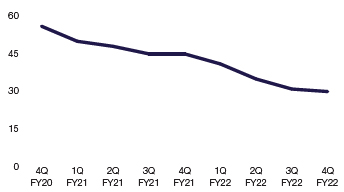
For the past few years, the scope of ALICE's monitoring efforts has been focused on ensuring that basic security hygiene disciplines are embedded and operating effectively within the IT environments across Bidvest. The Group achieved a risk score of 29% (target: 25%) in the fourth quarter of this year for basic security hygiene, the lowest risk score achieved to-date.
Indicated by the graph to the right, with the downward trajectory of the Group ALICE score reducing from 90% in November 2019 to 29% in this last quarter, it is clear that the purpose of ALICE in de-risking the Group from cybersecurity attacks because of control breakdowns in basic security hygiene disciplines, has been achieved. This does not mean the Group is immune to cybersecurity attacks, it does mean that cyber criminals will need to work harder to compromise our IT environments.
IT risk score
As the adoption of ALICE has matured, so too has her scope of monitoring of the IT environments. Development of control tests over more sophisticated security disciplines is underway coupled with control tests beyond the realms of the IT environment. Such control tests are extending into the financial, operational and regulatory environments across Bidvest.
Users act as a human “firewall” and can be critical in preventing and/or detecting cybersecurity attacks. Deployment and use of Cybersecurity Awareness Training programmes are well underway across the Group augmenting the assurance achieved from the ALICE monitoring.
A formal Cybersecurity Incident Response Policy & Plan was rolled out across the Group in May 2022.
IT resources
An ever-increasing demand and dependency on technology exists to enable business expansion through alternative market channels, optimisation of operational and logistical processes, cost efficiencies and competitor differentiation. To meet these demands and dependencies by business, requires different skill set requisites. The global shortage of these IT skill sets is mitigated through aggressive retention strategies, strong and robust vendor management and actively growing our own pipeline of talent through technology internships.
Our second Bidvest Technology Internship started on 1 February 2022 and operated for a period of ten months. The Technology Internship kick started with a Data Bootcamp (online training program) developed by the ALICE team to assess the skillset and capability of the interns. The twofold purpose – to create a pipeline of talent for the Group but also to facilitate an upliftment of skills across SA – of the Bidvest technology Internship is being achieved with resounding success.
The Bidvest IT Forum continues to shape facilitated discussions around knowledge-sharing and research across the Group which has proved invaluable during the global shortage of IT skill sets and capacity. The Bidvest IT Forum also plays a pivotal role in leveraging the Group's purchasing power with key IT vendors.
Data governance
Protection of data remains a focus area for the Group, from architecture to security, particularly considering the new privacy laws and regulations in place. For emphasis, it is repeated that information and/or data is acknowledged as a corporate asset by the Group and must be appropriately secured and protected – a challenge considering the global skill set deficit and capacity constraints.
External assurance
PwC, the Group's external auditor issued their opinion on the FY2022 AFS. In their opinion, the AFS fairly represents, in all material respects, the consolidated financial position of Bidvest and its subsidiaries as at 30 June 2022, and its consolidated financial performance and cash flows for the year then ended.
Key audit matter raised referred to impairment assessment of indefinite useful life intangible assets and goodwill. Please refer to the Independent auditor's report for the full opinion.
ALICE
Born from a dual need of 1) providing continuous and near real-time visibility to various stakeholders into the cybersecurity risks and remediation strategies across the Group; and 2) equipping a talented and highperforming team with the skills and opportunities to pioneer the future of the assurance space rather than being disrupted by it, the first piece if ALICE code was written in November 2016.
Fast forward to 2022, ALICE has become embedded in the operations of each of the environments across the Group. The Group's governance mindset has shifted from annual audit, risk and compliance reviews to continuous monitoring of their control environments.
Growth
The scope of ALICE has extended beyond basic security hygiene disciplines to testing of more sophisticated cybersecurity-related controls ranging from multifactor authentication to external threat monitoring. Given the evolving IT landscapes, the need to extend ALICE's scope to auditing cloud environments became necessary. Given that cloudrelated skill sets in the assurance space are a rare commodity, ALICE's cloud audit has augmented the skill sets of assurance functions, allowing them to mitigate the associated risk exposures.
Follow ALICE on LinkedIn to see her recent trip to India.

ALICE now has reach beyond testing IT controls. Her scope has extended into financial, operational, risk, compliance and regulatory control testing too. Given Bidvest's employee base, payroll monitoring was introduced as a Group-wide initiative this quarter, the deployment and roll-out of which will continue over several quarters to follow.
Partnerships
Trading as Bidvest Advisory Services (Pty) Ltd, ALICE has commercial agreements in place with both local and global partners. ALICE is a technology enabler, and the purpose of these partnerships was to accelerate the distribution of both the ALICE technology and associated services into different markets.
- One of the ALICE audit firm partners has successfully built products on ALICE to allow them to audit certain financial statement line items at scale and within minutes, with little to no human intervention.
- Another ALICE partner, this time in the technology space, digitalised their offering around digital transformation assessments that used to be performed using manual and human effort. ALICE now performs these assessments in an intelligent and automated way, allowing them to scale this offering globally.
Clients
The ALICE client base, beyond that of the Bidvest companies, has also extended. Recent client engagements involved digitalising the Sarbanes-Oxley 404 control testing at a very large mining client; and a client requiring assistance on their digital journey in the risk-monitoring space. Uncertain of where to start and which monitoring procedures and/or control tests to intelligently automate, ALICE’s automatability assessment prioritised which ones were eligible to digitalise.
Democratisation
The demand for ALICE development exceeding the ALICE Team’s capacity and ability to deliver in the required timeframes led to the development of the ALICE Lab – initiated over one year ago. We are pleased to announce the recent launch of the ALICE Lab to the Group, our partners and clients.
The ALICE Lab expedites processes around planning, functional specifications, development, testing and production releases by democratising these processes – allowing the different audit, risk and compliance functions the opportunity to get involved at their own pace and as their skill, capacity and digital demands allow. In turn, the dependency on ALICE Team’s capacity and ability to deliver in the required timeframes lessens.
Team
The ALICE Team continues to growth and attracts resources that want to be relevant and successful in a disrupted future. The second Bidvest Technology Internship started on 1 February 2022 and will run for a period of ten months, with 12 interns. The aim of the internship continues to be around improving and increasing the pool of technology skills across the Group as well uplifting such skill sets of the country.
The internship kicked started with a Data Bootcamp (online training programme) developed by the ALICE Team to assess the skillset and capability of the interns. Much time and skills investment are made by the ALICE Team into the interns throughout the internship.
The journey continues
ALICE means something different to her differing audiences. ALICE herself ascribes to the Open Data Initiative and values the power of sharing both within the organisation and beyond.
To those charged with governance, she provides aggregated visibility into the risks and remediation strategies across environments. To management, she provides continuous monitoring on their environments and alerts them to risks in a near real-time way. To the audit community, she augments skill sets and capacity to deliver on the ever-increasing demands of assurance functions. To our partners, she allows them to scale and have global reach in delivering the services they used to perform manually in an intelligent and automated manner. To the intern, she represents an opportunity to upskill and position themselves for a successful future. And, finally to the ALICE Team, she has allowed them to innovate beyond the realms of a textbook in the assurance space.
To find out what ALICE can mean to you or to partner with the ALICE Team to create shared value, please email: alice@bidvestalice.com
"We have a business culture that has readily adapted ALICE and now relies heavily on her abilities in unexpected directions. In our highly entrepreneurial and performance‑driven environment it is exciting to have been an early pioneer of AI in the governance space. Many companies speak about 4IR technology and innovation, but have yet to see it. And here we are, ALICE is deployed across multiple businesses in the Group and also externally. We're really excited about the future and how AI can shape our business for the better."
Mpumi Madisa