


Material focus areas, risks and responses
Our decentralised, asset-light and everyday essential products and service business model is an effective risk management tool. We cannot control macro conditions, but we can control how we respond.
The board’s Risk committee assists in recognising all material risks to which the Group is exposed and ensuring that the requisite risk management culture, policies and systems are in place and functioning effectively. Risks are assessed on an enterprise-wide level and their individual and combined impact considered. Internal Audit assist in evaluating the effectiveness of the risk management process and comment on this in their own assessment reports. Management is accountable to the board for implementing and monitoring the processes of risk management and integrating this into day-to-day activities. Divisional risk committees are engaged to actively focus management on critical issues faced at a business and industry level. The key strategic risks are reported to the Group Risk committee for consideration at board level.
The material risks identified have emerged as a result of analysing and understanding the direction in which each entity is moving as well as the overlay of the Group’s strategy and macro conditions.
Supply chain constraints
Material
focus area
- The imbalance in the world's container fleet, various levels of lockdown across the world, the impact of the third wave of the pandemic on manufacturing facilities in the East and the resumption of economic activity in pockets of the global economy are resulting in material delays when importing containerised goods.
- Additionally, the Transnet cybersecurity attack exacerbated the already inefficient Durban harbour, disrupting the broader supply chain into South Africa even further and adding extra costs.
- Freight rates have also increased significantly, and we continue to be faced with product and raw material shortages.
Stakeholders
impacted
- Partners and potential partners
- Customers
- Suppliers
Response to ensure value
is sustained
- In as far as possible, orders are being front loaded whilst being very cognisant of the risk of inventory brought in at (potentially) elevated prices. Stock availability has been a key differentiator in FY2021.
- Dialogue with Transnet has been elevated to ensure a better understanding of the need to improve efficiencies.
- Commercial Products received some enquiries from customers that are exploring dropping house brands in favour of other branded product as they struggle to source product. In Home of Living Brands a very distinct growth differentiation between core brands across the price spectrum (Russell Hobbs, for example) and small, peripheral brands was noted.
- Exploratory work is being done by Adcock Ingram and Commercial Products to establish local manufacturing of some products.
- To date, most customers have accepted price increases.
- Vehicle model shortages have started to depress sales activity, but management used this to improve gross margins on sales and focus on selling more used vehicles.
Challenging economic outlook and constrained consumer spend
Material
focus area
- Constrained operating environments requires that the Group enhances its operating focus to ensure a managed impact on the business.
- It is critical for the Group to maintain its competitive advantages, and remain relevant in its markets.
Stakeholders
impacted
- Equity and debt investors
- Employees and trade unions
- Government, governing and regulatory bodies
- Partners and potential partners
- Customers
- Suppliers
Response to ensure value
is sustained
- Although we expect the uncertain and fragile operating environment in South Africa to continue, we have a track record of outperforming and we remain confident into the medium-term.
- Encouragingly, there are signs of increased infrastructure investment activity out of the mining and industrial sectors.
- Significant attention has been placed on rightsizing all Group businesses to ensure that operating models remain relevant and future fit.
- Bidvest has a portfolio of defensive, cyclical and growth assets that are strongly cash generative, and will retain its ethos of being a customer-centric organisation.
- Agility, a can-do attitude and appropriate disruptive strategies result in innovative and value-adding solutions, as well as opening-up additional opportunities, thereby maximising its diverse portfolio and adapt quickly to changing customer requirements and market dynamics.
Increasing regulation, the cost of doing business and diminishing South African infrastructure
Material
focus area
- South Africa requires sustainable GDP growth to create social and economic prosperity.
- The country's infrastructure development and maintenance has been limited.
- Government's ability to credibly address the precarious financial position of several SOEs, initiation of development programmes and ongoing maintenance of national infrastructure and key facilities remains critical to sustainable growth in the South African economy.
- Managing the proliferation of regulatory and governance requirements across industries add costs in an already price-sensitive market.
- These complexities consume a growing amount of management time and resources.
Stakeholders
impacted
- Equity and debt investors
- Employees and trade unions
- Government, governing and regulatory bodies
- Partners and potential partners
- Customers
- Suppliers
Response to ensure value
is sustained
- Bidvest's decentralised model allows it to adapt and implement value-adding solutions and structures while complying with relevant legislation at operational level.
- Bidvest is actively participating in national workstreams incorporating labour, government, civil society and business to achieve real and sustainable GDP growth.
- Private sector needs to invest to establish and grow businesses and industries. Bidvest, as a committed corporate citizen and investor in South Africa, is well-positioned to augment initiated projects, and has undertaken various projects to achieve this objective.
- An enabling and aligned legislation that cuts across sectors is key.
- Thorough due diligence is done on potential business partners.
- Continuous rightsizing and the introduction of technology lowers the cost of doing business.
- The Group made significant progress in implementing POPIA awareness campaigns and putting in place compliance processes, all done in time to meet the legislative deadline.
Ongoing COVID-19 impacts, notably the hybrid way of working and learning
Material
focus area
- The COVID-19 pandemic continues to affect Group's businesses in various ways: some are impacted more positively, while others continue to feel the effects of the decline in economic activity.
- This transitioning model for a new way of working, learning, buying/transacting is driving rapid adoption of technology resulting in material structural demand contraction in office products, money transfer, etc.
- The travel, hospitality and certain commercial sectors, in particular, remain under pressure from ongoing and variable restrictions and related decreases in demand.
- The pandemic has undoubtedly heightened the awareness of and the need for out-of-home hygiene. This is expected to accelerate the development and maturity of the industry globally.
- Both the United Kingdom and Ireland have eased lockdowns after achieving high vaccination rates. In these regions, the return to offices is evident in the reduction in PHS' contract suspensions.
- In South Africa, lockdown restrictions remain, and corporates, particularly in professional services, have not fully returned to the office.
- Growing inequality has elevated socioeconomic instability risk. This is particularly relevant in South Africa.
Stakeholders
impacted
- Equity and debt investors
- Employees and trade unions
- Communities, including community-based organisations, non-profit and non-governmental organisations
- Government, governing and regulatory bodies
- Partners and potential partners
- Customers
- Suppliers
Response to ensure value
is sustained
- Bidvest continues its response and support for the safety, health and well-being of all is stakeholders. A Group-wide comprehensive employee wellness programme was rolled-out.
- Bidvest's growth strategy, internationally, is focused on hygiene and facilities management services. While office occupancy is not likely to reach prepandemic levels in the immediate future, demand for cleaning and hygiene services is expected to remain high as more people return to office work, for at least part of the week, and a greater awareness and requirement for sanitisation.
- Strategic actions have been taken to make sure that operating models remain relevant, Bidvest's scale and balance sheet strength ensured stock availability in preparation for an, albeit slow, return to markets, and business development teams across the Group have adapted traditional approaches and put forward value-added solutions to customers.
- The facilities management type-operations can be flexed to meet varied customer demand.
- This changing environment has also brought opportunities for greater on-line penetration of our products and supply enabling product into this channel.
- The pandemic brought about socio-economic shifts and long-term structural changes, and the Group has proved support and assistance in varying forms across the spectrum to alleviate these pressures.
- A vaccination campaign has been launched internally encouraging employees to be immunised, and a mobile clinic travels to various Group businesses to assist in administering the vaccine.
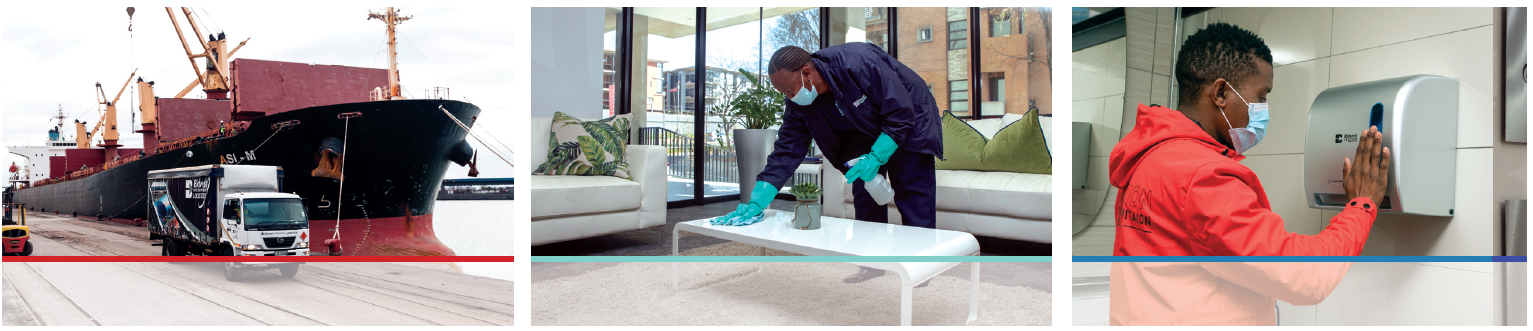
Cyber assaults
Material
focus area
- IT systems are vulnerable to a number of problems, such as software or hardware malfunctions, malicious hacking, physical damage, and computer virus infection.
- The Group relies heavily on these systems and is increasingly dependent on its technology infrastructure for the effective operation of its business.
- Consequently, this could result in disruption of service provision, reduced revenues, cost increases and will impact long-term sustainability.
Stakeholders
impacted
- Equity and debt investors
- Partners and potential partners
- Customers
- Suppliers
Response to ensure value
is sustained
- The Group remains committed to conducting business with uncompromising integrity and actively manages cybersecurity risk.
- Bidvest continues to invest in IT infrastructure, including business continuity plans, back-up systems and maintain and improving the disaster recovery centre.
- ALICE, an internally developed artificial intelligent tool, monitors and advises on IT hygiene across businesses and systems on a continuous basis. This allows for near immediate remediation.
- Data governance, including the necessary IT architecture, is being tackled at business level, particularly by the Group's companies which are most exposed to data risks.
- Bidvest has comprehensive Group-wide property damage and business interruption insurance in place.
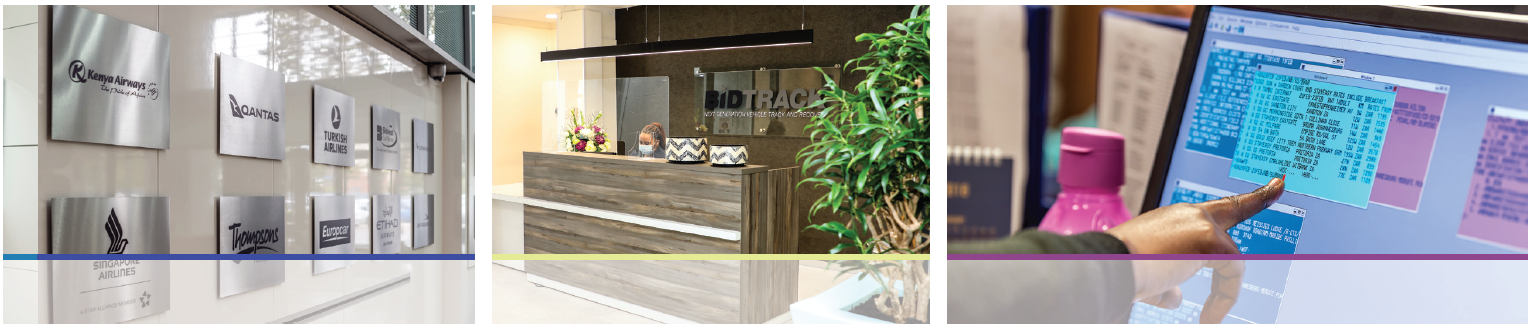
Loss of agency and distribution rights, port leases and licences
Material
focus area
- This remains a cornerstone of the way Bidvest does business. If the Group is unable to acquire and protect its agency and distribution rights, it could harm the Group's business.
- The Commercial Products and Branded Products divisions in particular are reliant on their ability to retain their existing agency and distribution rights.
- Freight businesses hold leases with Transnet for tenures varying from month-to-month to multiple years.
- Transnet has a legislated right to restructure and reform its port footprint, and the private sector primarily secures leases through open tender processes.
Stakeholders
impacted
- Equity and debt investors
- Government, governing and regulatory bodies
- Partners and potential partners
- Customers
- Suppliers
Response to ensure value
is sustained
- Fostering positive long-term relationships with key suppliers, landlords and licensors, and management is constantly challenged to manage and grow these relationships.
- The constant communication and monitoring of demand changes allow Bidvest businesses to be proactive and part of the solution.
- Many of the Commercial Products and Branded Products divisions' agency and distribution rights are longstanding and have historically been renewed without notable difficulties, which remains Bidvest's strategic intent.
- Bidvest has had several interactions with Transnet with regards to the new Durban Port Master Plan and a joint technical team has been set up to explore alternatives in the quest to achieve a commercially viable outcome for the benefit of all stakeholders.
The shortage of skills
Material
focus area
- The short- and medium-term disruption in the event of sudden departures due to lack of skilled management is a concern, but well understood.
Stakeholders
impacted
- Employees and trade unions
- Government, governing and regulatory bodies
- Partners and potential partners
- Customers
Response to ensure value
is sustained
- The Group endeavours to continuously develop the skills of its employees and in the industries in which it operates.
- It will continue to focus on maintaining and rewarding a high-performance culture and will maintain its encouragement for an entrepreneurial attitude.
- The Group will also continue to develop people through training academies, graduate and learnership programmes and recognition.
- Bidvest is also investing in the human capital of its various communities, which affords the Group the opportunity to draw skills from and support local businesses.
Other key risks areas:
- Excessive capital investment in terms of both operational asset management and acquisitions;
- Reputational risk embedded in sub-contracting and third party relationships; and
- Environmental and social impact consciousness.